Does Muscle Weigh More Than Fat? Muscle vs Fat Explained
Understand weight, density, body composition, and why the scale may not show the whole story—plus how WellyPal can help you follow the trends that matter.
Updated
Does Muscle Weigh More Than Fat?
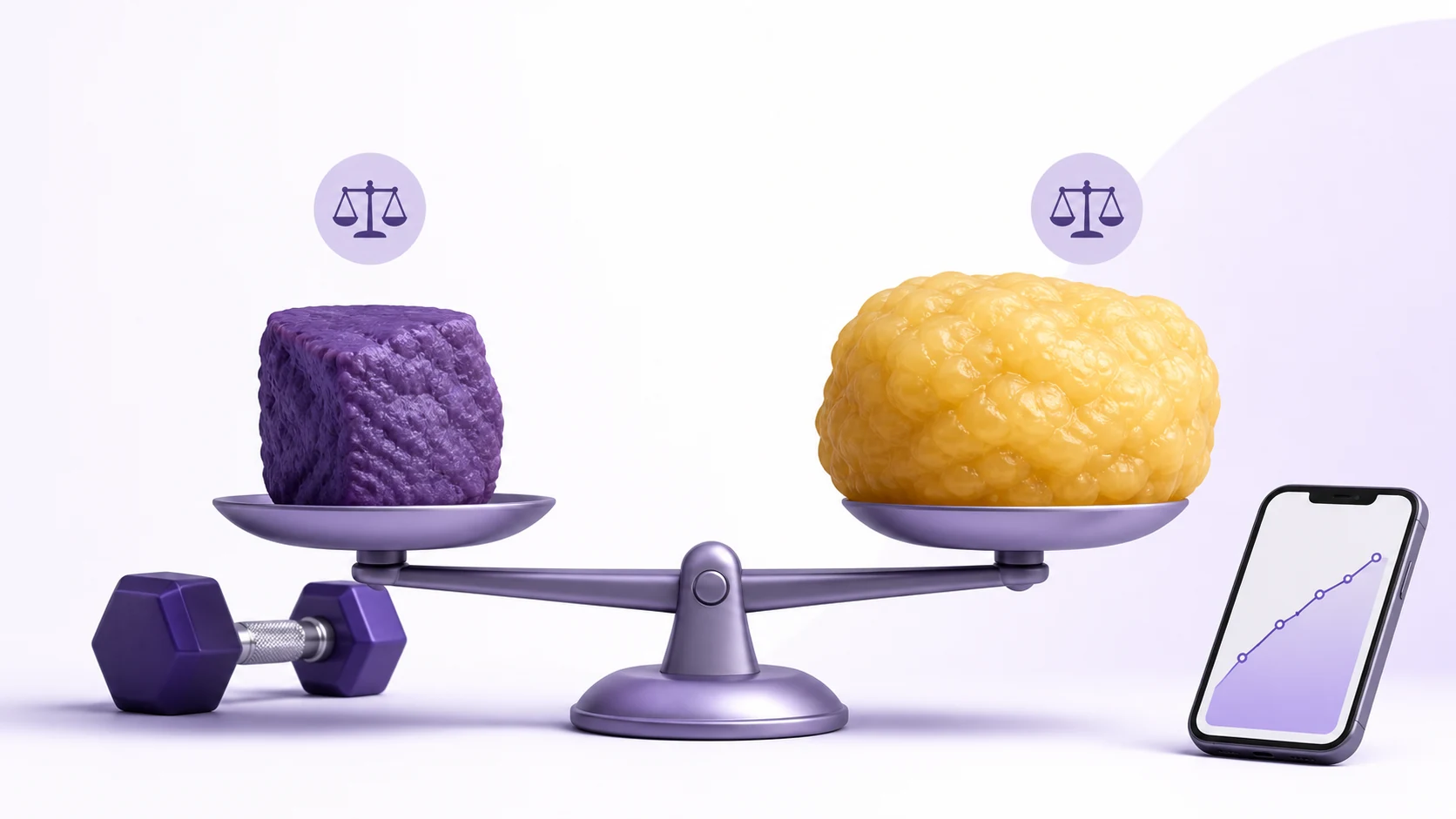
No. A pound of muscle and a pound of fat weigh exactly the same: one pound. The real difference is density. Muscle tissue is denser than body fat, so the same weight of muscle generally occupies less space than the same weight of fat.
This is why someone can weigh the same—or occasionally more—while looking smaller, feeling stronger, or wearing clothes differently after gaining muscle and losing fat. The scale measures total body weight. It cannot tell you how much of that weight comes from muscle, fat, bone, water, organs, or food moving through the digestive system.
Muscle vs Fat: The Key Difference
| Question | Muscle | Body fat |
|---|---|---|
| Does one pound weigh more? | No—one pound is one pound | No—one pound is one pound |
| Relative density | Denser; usually takes up less space at the same weight | Less dense; usually takes up more space at the same weight |
| Main roles | Movement, strength, posture, and metabolic function | Energy storage, insulation, cushioning, and hormone-related functions |
| Can a bathroom scale separate it? | No | No |
| Can WellyPal measure it? | No—WellyPal tracks habits and trends, not body composition | No—WellyPal tracks habits and trends, not body composition |
Why Muscle Can Look Smaller Than Fat at the Same Weight
Imagine two objects with the same weight but different volumes. The denser object fits into less space. Muscle and fat follow the same basic principle: equal weights do not require equal volumes. That visual difference is the source of the common phrase “muscle weighs more than fat.” A more accurate statement is: muscle is denser than fat.
The comparison should not imply that body fat is useless or that more muscle is always better. Body fat performs essential functions, and healthy body composition varies among individuals. The goal is not to eliminate fat; it is to evaluate health and progress in context.
Why the Scale May Rise When You Start Strength Training
A higher scale reading after beginning a new routine does not automatically mean body-fat gain. Short-term changes can reflect water, glycogen, food in the digestive tract, sodium intake, menstrual-cycle effects, time of day, or normal measurement variation. Over longer periods, a person may also gain muscle while losing fat.
Muscle gain is gradual, and the scale alone cannot confirm that it happened. Avoid using one surprising number to declare success or failure. Compare measurements taken under similar conditions and focus on the direction across several weeks rather than the change from yesterday.
Body Weight Is Not the Same as Body Composition
Body weight is the total mass shown on a scale. Body composition describes the components behind that number, including fat mass and fat-free mass. BMI is also a weight-for-height screening measure; it does not distinguish fat, muscle, and bone. A clinician may use physical assessment or tools such as DEXA when a more direct body-composition estimate is appropriate.
Consumer smart scales estimate body composition using algorithms and electrical impedance. Hydration, food, exercise, skin temperature, and device placement can affect readings. If you use one, treat it as an imperfect trend tool rather than an exact measurement of today’s muscle or fat.
Better Ways to Evaluate Progress
A useful progress picture combines several signals instead of asking the scale to answer every question.
- Weight trend measured under similar conditions
- Waist or other circumference measurements taken consistently
- How clothing fits
- Strength, repetitions, pace, or other performance markers
- Energy, recovery, sleep, and ability to follow the routine
- Clinical measurements when recommended by a qualified professional
Photos and measurements can be sensitive for some people. Use only the methods that support your well-being and avoid compulsive checking.
How WellyPal Helps You See More Than One Number
WellyPal does not measure muscle mass or body-fat percentage. Its value is helping you organize the daily behaviors that sit behind longer-term trends. On iPhone, you can record meals by photo or voice, view weight changes over time, and keep food, water, activity, and goals in one connected experience.
The nutrition dashboard makes calories, protein, carbohydrates, fat, fiber, sugar, and sodium visible at a glance. Protein is especially relevant to people following a resistance-training routine, but one high-protein meal does not build muscle by itself. Total nutrition, progressive training, sleep, recovery, health status, and consistency all matter.
WellyPal’s AI Coach can help turn the day’s records into a realistic next action—for example, planning a protein-containing meal after a low-protein day, returning to a normal routine after an unplanned meal, or noticing that a single scale increase does not define the overall trend. It provides general wellness guidance, not a diagnosis or body-composition test.
A More Useful Weekly Check-In
Review the weight trend, not only the newest measurement.
Compare workouts or activity with your recent baseline.
Check whether meals regularly support your calorie, protein, fiber, and hydration goals.
Notice recovery, sleep, energy, and how clothing fits.
Choose one small adjustment for the next week instead of reacting dramatically to one number.
Frequently Asked Questions
Does muscle weigh more than fat by volume?
For the same volume, muscle generally weighs more because it is denser. For the same weight, muscle generally occupies less space. This is the distinction behind the phrase.
Can I gain muscle and lose fat without losing weight?
Yes, body recomposition can occur, but the rate and amount vary. A stable scale combined with changes in measurements, clothing fit, strength, or professionally assessed body composition may provide more context.
Why did I gain weight after working out?
Short-term increases may reflect fluid shifts, glycogen, inflammation associated with a new workout, food, sodium, or ordinary daily variation. A single reading cannot identify the cause.
Is BMI accurate for muscular people?
BMI does not distinguish fat, muscle, and bone. It can be a useful screening measure, but muscular individuals and other people may need additional context from a qualified healthcare professional.
Can WellyPal calculate my body-fat percentage?
No. WellyPal helps track food, nutrients, activity, water, weight trends, and goals; it does not directly measure muscle mass or body-fat percentage.
The Bottom Line
Muscle does not weigh more than fat when the weights are equal; it is denser and usually occupies less space. Use the scale as one data point, not a complete judgment. WellyPal can help you connect nutrition, activity, water, and weight trends so your next decision is based on the broader pattern rather than one isolated number.
WellyPal is not a medical provider and does not replace advice from a doctor, registered dietitian, or other qualified professional. If you have a medical condition, special dietary restriction, pregnancy-related nutrition need, eating disorder risk, or medical nutrition concern, consult a qualified professional. Calorie, nutrient, activity, weight, and AI estimates are intended for general wellness education and everyday tracking, not diagnosis, treatment, body-composition measurement, or a professional nutrition prescription.
Track More Than the Scale
Connect nutrition, activity, water, and weight trends with WellyPal and choose one realistic weekly adjustment.
Get WellyPal Free