What Is WellyPal? A Simpler AI Health Tracking App
How WellyPal makes meal logging, weight tracking, and everyday guidance easier.
Resources
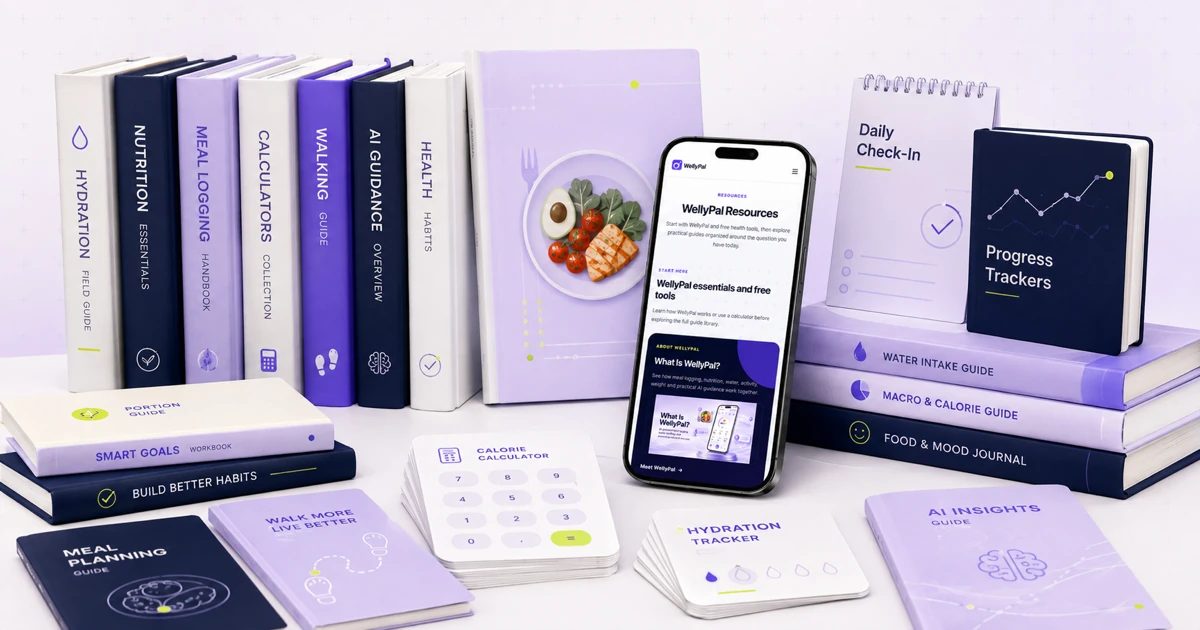
Simple, practical guides for healthier everyday decisions.
How WellyPal makes meal logging, weight tracking, and everyday guidance easier.
Compare calorie tracking with AI guidance and choose the right level of support.
Choose lighter restaurant and takeout meals without limiting yourself to salad.
Reduce logging friction with photos, voice, and good-enough check-ins.
Use key meals, long-term trends, and lower-pressure habits to stay consistent.
Choose a practical dinner based on today’s context, hunger, options, and goals.
A plain-language guide to logging meals, tracking weight, understanding daily progress, and getting practical guidance from an AI Coach.
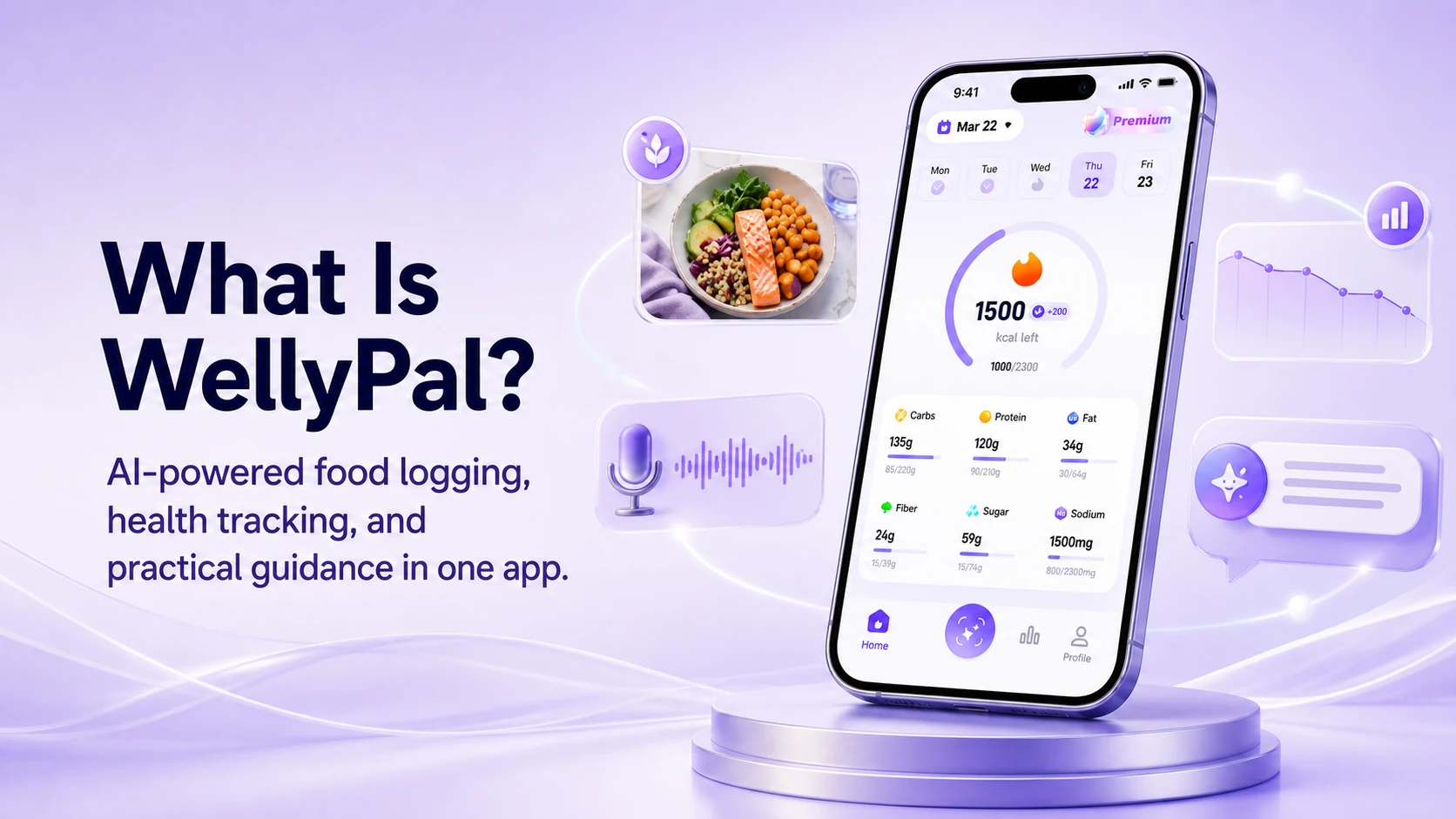
WellyPal is an AI health tracking app that helps users log meals, track weight, understand daily health progress, and get practical guidance from an AI Coach.
It is designed for people who want to eat healthier, manage weight, and build more consistent routines without making food tracking feel stressful. WellyPal is not focused on forcing users to calculate every bite perfectly. Its goal is to make tracking easier and help users know what to do next in everyday health decisions.
This page is for people searching questions like:
WellyPal helps make health tracking lighter, easier to continue, and more useful in real life. It does not only ask users to enter data. After a user logs meals, weight, or daily check-ins, WellyPal helps them understand their current situation and choose a better next step.
WellyPal helps users with three core jobs: log, understand, and act.
Record meals by photo, voice, or quick input with less manual searching.
See changes in food habits, weight, and daily progress more clearly.
Use AI Coach guidance to choose a realistic next step for the day.
For logging, users can record meals by photo, voice, or quick input, reducing the effort of searching for foods manually and estimating portions from scratch. For understanding, WellyPal helps users see changes in food habits, weight, and daily progress. For action, AI Coach can suggest a more realistic next step based on the user’s current context.
WellyPal can help users:
Many people understand that healthy eating matters, but still struggle to keep up with traditional tracking. A typical app may ask users to search for foods, enter portions, review calories, and then figure out what to do next on their own.
The problem is that real life is not always built for perfect tracking. Users may be eating out, rushing between tasks, feeling tired, or simply trying to remember what they ate earlier. The more complicated logging feels, the easier it becomes to stop.
WellyPal is designed to reduce that friction. It helps health tracking feel less like a daily chore and more like a small action users can restart at any time.
Many people assume food tracking only matters if every bite is logged precisely. In reality, for most everyday users, consistency and trend awareness are often more useful than perfect accuracy on a single meal.
The same meal can mean different things on different days. If lunch was heavy, dinner may be lighter. If the user barely ate during the day, dinner may need to be more filling. WellyPal focuses on helping users make the next best choice based on today’s context.
Many users feel they have failed after missing a day or forgetting one meal. A better approach is to restart with the next meal. Health tracking should not reset to zero because of one missed entry.
A traditional calorie tracker works more like a data table. It helps users record what they ate and how many calories they consumed. WellyPal works more like an AI health coach. It still supports logging, but it also helps users understand the data and decide what to do next.
A user can tell WellyPal what they already ate today, what options they have, and what goal they are working toward. AI Coach can help them choose a dinner that fits their current situation.
A user can enter a few takeout options and ask WellyPal to compare which one fits better today, such as a chicken bowl, sushi, pasta, or a burger meal.
A user can take a photo or describe a meal by voice, making food logging faster and less stressful.
WellyPal can help users think about weight from a trend perspective instead of focusing only on one daily number.
WellyPal is not a medical provider and does not replace advice from a doctor, registered dietitian, or other qualified professional. Users with medical conditions, special dietary restrictions, pregnancy-related nutrition needs, eating disorder risk, or medical nutrition concerns should consult a qualified professional.
WellyPal is an AI health tracking app that helps users log meals, track weight, and get practical guidance from an AI Coach. It is designed for people who want to lose weight, improve eating habits, reduce food logging stress, or manage health in a lighter way. WellyPal is not only about recording data. It helps users understand their current situation and choose a practical next step.
WellyPal can help users log meals, track weight, and get practical guidance that supports healthier routines. It does not guarantee weight loss results, but it can help users build more consistent habits.
No. Users can start with one meal, one photo, one voice note, or one quick check-in.
WellyPal includes food logging features, but it is not only a calorie tracker. It focuses more on AI guidance, trend awareness, and everyday decision support.
Yes. WellyPal is designed to reduce logging pressure and make health tracking easier to continue.
If you want a lighter way to log meals, track weight, and get daily guidance from an AI Coach, start with one simple WellyPal check-in.
Get WellyPal FreeA clear comparison of calorie tracking and AI guidance—and how to choose the right level of support.
A calorie tracker mainly helps users record what they ate and how many calories they consumed. An AI fitness coach focuses more on understanding the user’s goals, daily context, and behavior patterns, then suggesting what to do next.
In simple terms, a calorie tracker is more like a data table. An AI fitness coach is more like a decision assistant. WellyPal combines meal logging, weight tracking, and AI Coach guidance, so users can both record information and understand their next step.
This page is for people searching questions like:
A traditional calorie tracker can be useful because it is structured and data-focused. It helps users record foods, calculate calories, review daily intake, and develop a clearer sense of how much they are eating.
For users who have a clear goal, enjoy precise data, and are willing to enter meals every day, a calorie tracker can be helpful.
The challenge is that many users still do not know what to do after the data is logged.
For example:
Traditional tools are often good at recording what happened, but less helpful at guiding the next decision.
An AI fitness coach is better suited for real-life decision-making. It does not only show numbers. It can combine the user’s goals, food logs, current situation, and available options to suggest a more practical next step.
An AI fitness coach can help users:
An AI Coach still needs some information to provide useful guidance. The difference is that tracking can be lighter, using photos, voice, or quick check-ins.
Accuracy matters, but it is not the same as sustainability. If a user quits because tracking is too hard, a highly accurate tool may not create long-term value.
Weight loss and health management are not only about daily numbers. Sleep, food timing, restaurant habits, emotions, and consistency all matter.
WellyPal’s value is connecting “recording data” with “getting guidance.” Users do not have to face a set of numbers alone. They can use AI Coach to understand how those numbers relate to their day and behavior.
WellyPal is an AI health tracking app that combines meal logging, weight tracking, and AI Coach guidance. It helps users record meals, understand the day’s context, and receive practical next-step suggestions.
WellyPal is especially useful for:
A traditional calorie tracker may ask the user to log what they already ate and interpret the numbers alone. WellyPal’s AI Coach can help the user choose a dinner that fits the day.
A user can ask WellyPal to compare a chicken bowl, sushi, pasta, or a burger meal and suggest which one better fits today’s situation.
Users do not always need to manually search for every food. They can start with a photo, voice note, or quick entry.
What users often need is not more numbers. They need a clearer next step. When an app can understand user goals, food logs, weight trends, and real-life context, it becomes more than a tracker. It becomes a daily health decision assistant.
A calorie tracker mainly helps users record food data, while an AI fitness coach focuses on suggesting the next step based on user goals and daily context. WellyPal combines meal logging, weight tracking, and AI Coach guidance, making it useful for people who want lower-pressure health management. Its value is not only recording what users ate, but helping them know what to do next.
No. An AI fitness coach can provide everyday guidance, but it does not replace a doctor or registered dietitian.
Some logging is useful, but WellyPal can reduce pressure with photo logging, voice logging, and quick input.
It depends on the user. If you need more than data and want help deciding what to do next, an AI Coach may be more useful.
If you enjoy precise tracking and can maintain it, a traditional calorie tracker may work well. If you want lower-pressure tracking and more practical next-step guidance, WellyPal may fit better.
Want more than calorie numbers? Open WellyPal and try AI Coach for your next health decision.
Get WellyPal FreePractical ways to choose lighter restaurant and takeout meals without limiting yourself to salad.
If you are trying to eat lighter at a restaurant, you do not have to order only salad. A better strategy is to choose meals with enough protein, more vegetables, controlled sauces, and lighter cooking methods. Grilled, steamed, boiled, roasted, or lightly cooked options are usually easier to manage than fried foods, creamy sauces, oversized starch portions, and sugary drinks.
WellyPal can help users compare restaurant and takeout choices and decide which meal better fits their current day and goals.
This page is for people searching questions like:
The challenge with restaurant food is not that healthy options do not exist. The challenge is that information is often unclear. Portions may be larger, foods may contain more oil, sauces may be heavier, and users often make decisions while hungry.
Many menus do not show full nutrition details. Even when calories are listed, users may still not know whether the meal fits today’s context. The same chicken bowl can be a good choice on one day and too much on another, depending on what the user already ate.
Many salads become high in calories when they include heavy dressing, cheese, nuts, bacon, fried chicken, or large portions of toppings. Salad does not automatically mean low calorie.
Many restaurant calories come from sauces, drinks, and sides. A main dish may look reasonable, but creamy sauces, fries, and sugary drinks can change the full meal quickly.
When users are very hungry, they are more likely to choose larger, heavier, sweeter, or fried foods. Comparing a few options first can reduce impulse ordering.
You can eat out while trying to lose weight. The goal is not to avoid restaurants forever, but to make a better choice from the menu in front of you.
Look for chicken, fish, shrimp, eggs, tofu, lean beef, or beans. Protein helps with fullness and makes the meal more stable.
Vegetables, beans, whole grains, and soups can help increase fullness. Meals with protein and fiber are usually more satisfying than meals built mostly around refined carbs.
Ask for sauce on the side when possible, or choose lighter sauces. Creamy sauces, mayonnaise-based sauces, sweet sauces, and heavy cheese sauces can add a lot quickly.
Choose grilled, steamed, boiled, roasted, braised, or lightly sautéed options more often. Limit fried, breaded, oily, and heavy-sauce meals when you want something lighter.
Options to consider include:
Be more mindful with:
These foods are not forbidden, but they can make it easier to exceed your goals for the day.
WellyPal is an AI health tracking app that helps users log meals, track weight, and get practical guidance from an AI Coach. In restaurant situations, WellyPal can help users compare menu options before ordering instead of choosing only by craving or hunger.
You can ask WellyPal:
If you want a burger, you might choose a single burger with salad or fruit and skip the large fries and sugary drink.
If you want Mexican food, you might choose a chicken bowl with beans, vegetables, and a smaller amount of rice while reducing cheese, sour cream, and extra sauces.
If you want Japanese food, you might choose sushi rolls, sashimi, miso soup, or grilled fish while limiting fried items and sweet sauces.
The best lower-calorie restaurant orders usually include enough protein, more vegetables or fiber, controlled sauces, and lighter cooking methods. WellyPal helps users compare restaurant and takeout options and choose the meal that better fits today’s goals. Eating out can fit a weight-loss routine when the choice is made with context.
Yes. The key is to choose takeout that better fits your day instead of treating all restaurant meals as off-limits.
No. Salads can be high in calories if they include heavy dressing, cheese, nuts, fried toppings, or large portions.
Yes. You can enter or describe a few options and ask WellyPal which one fits better.
You can use a photo, voice note, or simple description first, then add portion details if needed.
Before your next takeout order, open WellyPal and let AI Coach compare a few restaurant options for you.
Get WellyPal FreeSimple ways to reduce food-logging friction with photos, voice, and good-enough check-ins.
To log food faster, the key is not to make tracking more detailed. The key is to reduce friction. You can log a meal with a photo, voice note, quick text entry, or simple check-in instead of manually searching every food, entering every portion, and calculating every calorie.
WellyPal helps users log meals with less effort and understand their day through AI Coach.
This page is for people searching questions like:
Many users are willing to track food at first, but the process quickly starts to feel annoying. Traditional food logging often asks users to search each food, choose a brand, enter portions, confirm calories, and review daily totals.
In real life, that workflow can feel too heavy. A user may be working, commuting, taking care of family, eating out, socializing, or simply too tired after a meal to open an app and enter every detail.
Food logging often fails not because users lack motivation, but because the tracking process is too complicated.
If users expect themselves to log every bite from the beginning, they may quit after a few days. A better approach is to start with one important meal, such as dinner, takeout, or snacks.
Portion estimation is hard. For many everyday users, a consistent rough log is more useful than two days of perfect tracking followed by quitting.
Missing one meal does not mean tracking failed. The next meal is enough to restart.
The purpose of food logging is not to create guilt. It is to help users see patterns, understand trends, and make a better next choice.
Taking a photo of a meal is often faster than typing everything manually. A photo preserves useful food information and can help with later review, estimation, or meal summaries. It is especially helpful for takeout, restaurant meals, and mixed plates.
If you do not want to type, describe what you ate out loud. For example: “For breakfast, I had two eggs, one slice of toast, and coffee.” Voice logging is useful after meals, during busy moments, or when you want to capture something quickly.
You do not need to start by logging everything. Start with the meal that affects your goal most, such as dinner, late-night snacks, takeout, or high-calorie drinks.
Tracking does not need to be perfect to be useful. The goal is to understand patterns. A rough entry is often much better than no entry at all.
WellyPal is an AI health tracking app that helps users log meals, track weight, and get practical guidance from an AI Coach. In this scenario, WellyPal reduces the effort of food logging so users can start more easily and keep going longer.
WellyPal can help users:
A user orders a chicken bowl. Instead of manually searching every ingredient, they can take a photo first and let WellyPal help organize and estimate the meal.
A user can say: “Breakfast was oatmeal, banana, peanut butter, and coffee.” This is faster than entering each item one by one.
If the user is tired, they can simply log: “Dinner was pasta and salad.” This keeps the trend alive and allows details to be added later if needed.
The fastest way to log food is to reduce tracking friction with photo logging, voice logging, and quick check-ins. WellyPal helps users record meals with less effort and get practical feedback from AI Coach. For many users, consistent good-enough tracking is more valuable than perfect tracking that is hard to maintain.
No. For many users, consistent tracking is more important than perfect accuracy.
Yes. Takeout and restaurant meals are often hard to enter manually, and photo logging can make tracking much easier.
Voice logging is useful after meals, during busy moments, when you do not want to type, or when you need to quickly add a missed meal.
You do not need to restart from zero. Just continue with the next meal.
Want to log food faster? Open WellyPal and record your next meal by photo or voice.
Get WellyPal FreeA lower-pressure approach to weight loss built around key meals, trends, and consistent next steps.
Yes, it is possible to lose weight without obsessive tracking. Weight loss does not always require calculating every bite with perfect accuracy. For many people, a more sustainable approach is to log key meals, watch long-term trends, reduce the situations that often lead to overeating, and stay consistent with less pressure.
WellyPal helps users log meals with photos, voice, and quick check-ins while AI Coach provides practical next-step guidance.
This page is for people searching questions like:
Highly detailed tracking can create a sense of control in the short term, but it can also become exhausting. Many users start by carefully entering every meal, ingredient, and portion, then stop completely after a few days because the process feels stressful or unrealistic.
Real life is not always trackable in perfect detail. Social meals, takeout, travel, overtime work, mood changes, and missed logs all happen. When a tracking system expects perfect execution every day, it becomes hard to maintain.
Precise tracking can help some users, but it is not the only way. For many people, stable eating patterns, portion awareness, and consistent key behavior tracking matter more.
Weight changes can reflect water, sodium, sleep, hormones, digestion, and exercise. One day of weight data can be misleading without trend context.
One meal does not decide long-term progress. Repeated patterns matter more than one imperfect moment.
If strict tracking feels overwhelming, lower the intensity instead of quitting completely. Light tracking can still help users understand trends.
Start with the meal that most affects your goals, such as dinner, takeout, late-night snacks, or high-calorie drinks. This lowers pressure while still targeting important behavior.
Both weight and food habits should be viewed over time. Trends are more useful than one daily number.
A rough log is often better than no log at all. This is especially true for restaurant meals, social meals, and busy days.
Instead of focusing only on numbers, use AI guidance to decide what to do next. The next choice matters more than regret about the last meal.
WellyPal is an AI health tracking app that helps users log meals, track weight, and get practical guidance from an AI Coach. It is designed for people who want to lose weight without turning food tracking into a mental burden.
WellyPal can help users:
If dinner or late-night snacking is where you struggle most, start by tracking only that part. This reduces pressure while still showing an important pattern.
Restaurant meals are hard to estimate perfectly. Take a photo first and add a simple description. Do not skip tracking just because it cannot be exact.
If your weight goes up one day, look at recent food, sodium, sleep, and longer-term trends before assuming you failed.
A good weight-loss approach should not keep you tense all the time. It should help you understand your eating patterns, reduce repeated mistakes, make a better next-meal choice, and keep moving even after imperfect days.
Weight loss does not require obsessive tracking. A more sustainable approach is to watch trends, track key meals, accept rough estimates, and use an AI health tracking app like WellyPal for lighter next-step guidance. For many users, consistent low-pressure tracking is more valuable than short-term perfect tracking.
Yes, but you still need awareness of food structure, portions, and long-term trends. Tracking does not have to be extremely precise to be useful.
You do not need to start over. Just continue with the next meal.
Yes. WellyPal is designed to reduce tracking pressure and make health tracking easier to continue.
Yes. Light tracking is not the same as careless tracking. It focuses on key behaviors and long-term patterns instead of perfection.
Want to lose weight without feeling trapped by tracking? Open WellyPal and start with one simple check-in.
Get WellyPal FreeA practical three-step way to choose dinner based on today’s context, hunger, and goals.
If you are wondering what to eat tonight, do not start by searching for the perfect healthy meal. Choose a dinner that fits today. A good dinner usually includes protein, vegetables or fiber, a reasonable amount of carbs or healthy fats, and a simple structure that is easy to follow and log.
WellyPal can help you decide what to eat based on what you already ate today, how hungry you are, what food options you have, and what health goal you are working toward.
This page is for people searching questions like:
Dinner seems like a simple question, but it often carries several hidden decisions. You may be thinking about whether you already ate too much today, whether you got enough protein, whether takeout will slow your progress, whether dinner should be lighter, or whether you will feel guilty afterward.
Most people do not struggle because they do not care about health. They struggle because dinner decisions often happen when they are tired, hungry, busy, or mentally overloaded. The harder the decision feels, the easier it is to choose the fastest or most familiar option.
Skipping dinner may feel like a quick fix, but it can make you hungrier later and lead to overeating. For many people, skipping dinner is not the most sustainable choice.
Trying to find the perfect dinner can create decision fatigue. A good-enough dinner is often more useful than a perfect plan that never happens.
When you are very hungry, delivery apps make it easy to over-order. Comparing two or three options before ordering can help you make a better choice.
One dinner does not erase your progress. Long-term consistency matters more than making every meal perfect.
If lunch was heavy, dinner can be lighter. If you barely ate during the day, dinner should not be skipped. It should be filling enough without going overboard.
Ask yourself:
Do not start with a perfect recipe. Start with an easy meal pattern.
Useful options include:
The best dinner for long-term consistency is not always the most perfect meal. It is often the meal you can eat, log, and move on from without stress. WellyPal can help with photo logging, voice logging, portion estimation, and AI summaries that reduce tracking effort.
WellyPal is an AI health tracking app that helps users log meals, track weight, and get practical guidance from an AI Coach. In this scenario, WellyPal helps users decide what to eat tonight based on today’s context instead of only recording data after the meal.
You can ask WellyPal:
If lunch was heavy, you might choose grilled chicken or tofu with vegetables, soup with a protein side, or a protein-based salad with a lighter dressing.
If you want takeout, you might choose a chicken bowl instead of a burger meal, a sushi roll instead of fried noodles, or a salad with protein instead of creamy pasta.
If you are short on time, you might choose eggs with toast and vegetables, a Greek yogurt bowl with fruit and nuts, or a pre-cooked protein with a simple side.
When users do not know what to eat tonight, WellyPal can suggest a practical dinner based on their day, hunger level, available food options, and health goals. A dinner that supports healthier eating or weight loss usually includes protein, vegetables or fiber, a reasonable amount of carbs or fats, and an easy way to log the meal.
Choose a meal with protein, vegetables or fiber, and controlled portions of carbs or fats. If lunch was heavy, keep dinner lighter. If you are very hungry, choose something balanced and filling instead of skipping dinner.
Usually, skipping dinner is not the best fix. A better option is to choose a lighter, balanced meal that keeps you satisfied and helps you stay consistent.
Yes. You can ask WellyPal to compare takeout options and suggest which one better fits your day.
No. WellyPal can provide everyday health and food guidance, but it does not replace a doctor or registered dietitian.
Not sure what to eat tonight? Open WellyPal, get a simple personalized dinner suggestion, and log the meal by photo or voice.
Get WellyPal Free