How to Stay Active Every Day
A realistic guide to daily movement, active-calorie goals, and habits you can sustain.
Updated
Quick answer
To stay active, build movement into the day instead of relying on one perfect workout. For general health, U.S. guidelines recommend at least 150 minutes of moderate-intensity aerobic activity each week plus muscle-strengthening activity on 2 days. There is no universal number of active calories everyone should burn each day.
Staying active is easier when movement fits your actual life. A brisk walk, a short strength session, taking the stairs, playing with your children, gardening, cycling to an errand, or standing up between meetings can all contribute. The goal is not to chase the highest calorie number. It is to create a repeatable pattern that supports your health, energy, mobility, and personal goals.
How to Stay Active: Start With a Weekly Foundation
The Centers for Disease Control and Prevention recommends that adults get at least 150 minutes of moderate-intensity aerobic activity each week, or 75 minutes of vigorous-intensity activity, or an equivalent combination. Adults should also include muscle-strengthening activity on at least 2 days each week. The activity can be spread across the week and broken into smaller blocks.
These are health guidelines, not a pass-or-fail test. Some activity is better than none. If you are currently inactive, beginning with five or ten minutes and gradually increasing may be more useful than setting an ambitious plan you cannot maintain.
| Weekly component | General adult target | Examples |
|---|---|---|
| Moderate aerobic activity | At least 150 minutes | Brisk walking, easy cycling, water aerobics, active dancing |
| Vigorous aerobic activity | 75 minutes as an alternative | Running, fast cycling, vigorous swimming |
| Muscle strengthening | At least 2 days | Weights, resistance bands, body-weight exercises |
| Less sitting | Move more throughout the day | Standing breaks, stairs, short walks, active chores |
What Counts as Moderate or Vigorous Activity?
Intensity is relative to your fitness. During moderate activity, your breathing and heart rate increase, but you can usually talk in short sentences. During vigorous activity, speaking more than a few words without pausing may be difficult. A pace that feels moderate to one person may feel light or vigorous to another.
Seven Practical Ways to Stay Active
1. Attach movement to something you already do
Walk for ten minutes after lunch, stretch while coffee brews, or take a short movement break after a meeting. A reliable cue removes the need to make a new decision every day.
2. Break activity into smaller sessions
You do not need a continuous 30- or 60-minute workout to benefit. Several short walks, stair breaks, or brief strength sessions can add meaningful movement across the day.
If steps are your preferred activity marker, the Steps to Miles Calculator can turn your daily count into an estimated walking distance using your stride length.
3. Make the easy option more active
Park a little farther away, use stairs when practical, walk during phone calls, carry groceries in smaller trips, or stand up while reading messages. These choices are small, but repetition matters.
4. Keep two versions of your plan
Create a full version for days with time and a minimum version for busy days. For example, your full plan may be a 30-minute walk and strength workout, while the minimum plan is a 10-minute walk and one set of basic exercises.
5. Include strength, mobility, and balance
Aerobic activity is only part of an active life. Strength supports muscles and bones; mobility helps comfortable movement; balance work becomes increasingly important with age. Choose exercises that fit your current ability.
6. Choose activities you genuinely tolerate or enjoy
The best program is one you can repeat. Walking, dancing, hiking, sports, home workouts, gardening, and active play can all count. You do not have to copy someone else’s routine.
7. Review the week, not one imperfect day
Schedules, sleep, illness, and weather change. A weekly view helps you recover from a quiet day without treating it as failure. Consistency is built by returning to the plan.
How Many Active Calories Should I Burn a Day?
There is no single active-calorie target that is correct for everyone. Active calories are the energy you expend through movement above resting needs. Total daily calories burned also include basal metabolism—the energy required to keep your body functioning—and the energy used to digest food.
Two people can complete the same walk and receive different active-calorie estimates because body size, age, sex, fitness, pace, terrain, heart rate, and device algorithms differ. Research also shows that consumer wearables vary substantially in their estimates of energy expenditure. Treat the number as an estimate and a trend marker, not an exact measurement.
A Better Way to Set an Active-Calorie Goal
Instead of copying a generic target such as 300, 500, or 1,000 active calories, use your own baseline and health goal.
| Step | What to do | Why it helps |
|---|---|---|
| 1. Observe | Track 1-2 typical weeks without forcing a target | Shows your current activity pattern |
| 2. Choose behavior | Set minutes, sessions, steps, or movement breaks | Gives you an action you can control |
| 3. Add gradually | Increase a small, manageable amount | Reduces all-or-nothing thinking |
| 4. Review trends | Compare several weeks, not isolated days | Makes device error and daily variation less distracting |
| 5. Adjust | Use energy, recovery, health needs, and progress | Keeps the goal personal and sustainable |
Example Starting Points
These examples are behavior targets, not calorie prescriptions:
- Beginner: a 10-minute walk on five days this week, plus two brief strength sessions.
- Busy schedule: three 5- to 10-minute movement breaks on most days.
- Already active: maintain the weekly guideline and gradually add duration, intensity, or strength progression.
- Weight-management goal: combine sustainable activity with nutrition habits and review weight trends over time rather than trying to “earn” or cancel food with exercise.
If you want to use active calories, calculate your average from consistent device data, then consider a modest increase that you can repeat. Keep the same device and settings when comparing trends. Avoid treating exercise calories as permission to automatically add the same number of food calories, because both intake and expenditure estimates contain error.
How WellyPal Connects Movement With the Bigger Picture
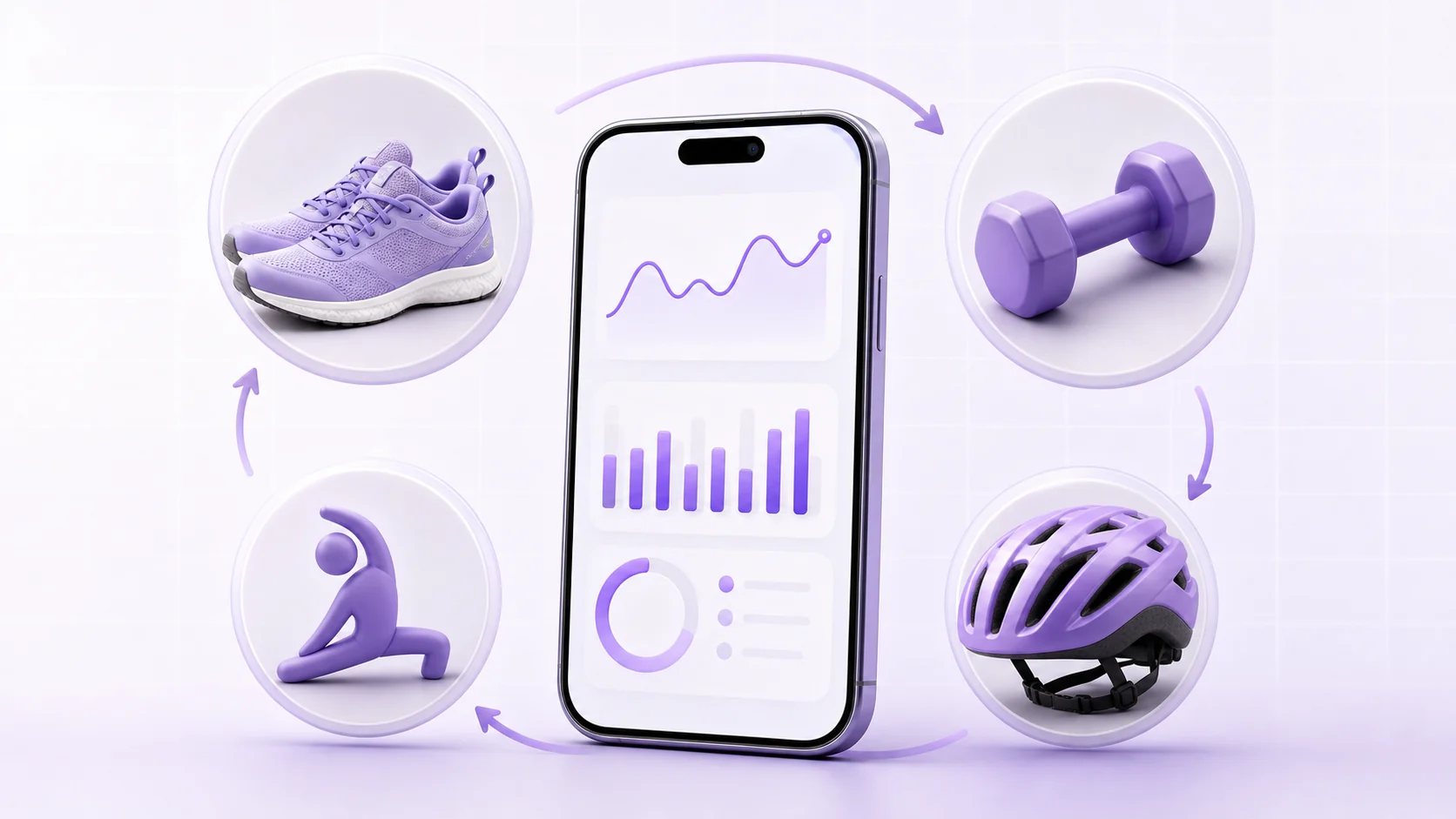
Activity rarely exists in isolation. A low-energy day may follow poor sleep; a stronger workout may change hunger; a busy week may affect meals, water, weight, and recovery. WellyPal helps bring those signals together so your activity goal is not just a number on a watch.
- Record everyday activity and workouts alongside meals, water, weight, and health habits.
- See daily and longer-term patterns in a clear dashboard.
- Compare active days with nutrition, energy, and recovery instead of judging one metric alone.
- Use the WellyPal AI health coach to turn your goals and logged patterns into practical next steps.
- Adjust the plan when your routine changes rather than abandoning it.
For example, if you repeatedly miss a large active-calorie target on workdays, WellyPal can help shift the focus toward smaller movement breaks and a realistic weekly goal. If activity rises but recovery feels poor, the useful next step may be rest, sleep, hydration, or nutrition—not pushing the calorie number higher. This is what makes the guidance feel connected: movement is interpreted as part of your whole routine.
When to Be More Cautious
Talk with a qualified healthcare professional before making a major change if you have a heart, lung, metabolic, joint, balance, or other medical condition; are pregnant; take medication that affects exercise response; or have symptoms during activity. People returning after illness, injury, or a long inactive period may benefit from a gradual plan tailored to their abilities.
Stop exercising and seek urgent medical care for chest pressure or pain, fainting, severe or unusual shortness of breath, sudden weakness, or other emergency symptoms.
Frequently Asked Questions
How can I stay active if I sit at work all day?
Use short movement cues: stand during selected calls, walk for a few minutes between tasks, take stairs when practical, and schedule a longer walk before or after work. Small breaks do not replace all planned exercise, but they reduce uninterrupted sitting and make movement more consistent.
Is walking enough to stay active?
Brisk walking can cover much of the aerobic recommendation. Add muscle-strengthening activities on at least 2 days each week, and consider balance work if it is relevant to your age or health.
Do household chores count as activity?
They can. Chores that raise your breathing and heart rate may contribute to moderate activity, while lighter chores still help you move more and sit less.
Is 500 active calories a day a good goal?
It may be realistic for some people and inappropriate for others. The number depends on your body, routine, activity type, device, and goals. Begin with your own baseline and prioritize a sustainable behavior target.
Why does my watch show different calories for the same workout?
Heart-rate readings, movement detection, GPS, body-profile settings, temperature, terrain, and device algorithms can all change the estimate. Compare trends under similar conditions rather than treating any single number as exact.
Should I exercise every day?
Daily movement can be helpful, but every day does not need to be intense. Alternate harder sessions with walking, mobility, easy activity, or rest according to your fitness and recovery.
Stay Active by Making the Plan Repeatable
The most useful answer to “how to stay active” is not a perfect workout schedule. It is a system you can return to: move more, sit less, meet the weekly aerobic and strength foundations when you can, and build gradually. Active calories may help show a trend, but they should support the plan rather than control it.
Sources
- CDC, “Adult Activity: An Overview”: https://www.cdc.gov/physical-activity-basics/guidelines/adults.html
- U.S. Department of Health and Human Services, “Physical Activity Guidelines for Americans, 2nd edition”: https://health.gov/paguidelines/second-edition/
- Stanford/PMC, “Accuracy in Wrist-Worn Measurements of Heart Rate and Energy Expenditure”: https://pmc.ncbi.nlm.nih.gov/articles/PMC5491979/
This resource provides general wellness education and product information. It is not medical advice. Consult a qualified healthcare professional before making a major change to your activity routine, especially if you have symptoms, a medical condition, pain, or limited mobility.
Turn daily movement into a visible habit with WellyPal
Track activity together with nutrition, water, weight, and recovery, then use clear trends and AI-guided next steps to keep your plan realistic.
Get WellyPal Free