Is 10,000 Steps a Day Enough for Weight Loss?
See what 10,000 daily steps can—and cannot—do, then use WellyPal to connect your walking, meals and weight trend.
Published
Quick answer
Walking 10,000 steps a day can support weight loss, but it does not guarantee it.
Those steps may increase the energy you use, especially when they represent a meaningful increase from your usual activity or include brisk walking. Weight loss still depends on the overall pattern: walking intensity, body size, food and drink intake, other activity, recovery, and consistency over time.
Treat 10,000 as an activity target—not a fixed calorie-burn number or a promise that the scale will move.
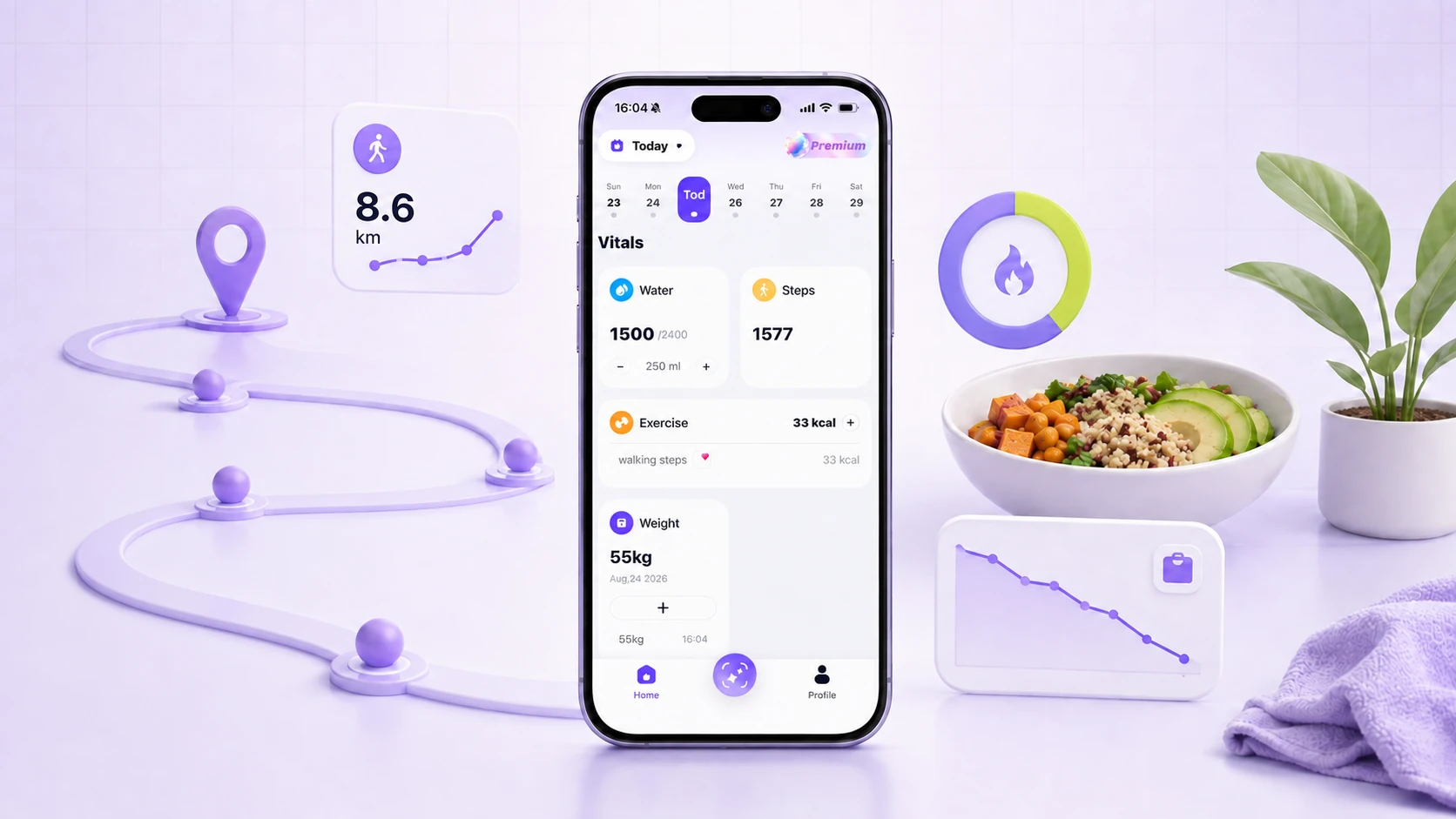
WellyPal helps you evaluate that wider pattern by placing synced steps beside meal logs, nutrition estimates, water, exercise and weight. Instead of stopping at “I reached 10,000,” you can see what happened across the whole day and decide what to adjust next.
From Steps to Distance to Calories to Weight Loss
A step count becomes more useful when you translate it into the next question instead of treating it as the final result:
- Steps: How much did you move today?
- Distance: How far did those steps take you?
- Energy: How did that movement contribute to your total daily calorie use?
- Weight trend: Did your activity and food pattern create a sustainable calorie deficit over time?
Start with How Many Miles Is 10,000 Steps?, then personalize the estimate with the free Steps to Miles Calculator. For many adults, 10,000 steps is roughly 4–5 miles, but stride length can move the result outside that range.
How WellyPal Turns a Step Goal Into a Feedback Loop
A pedometer can tell you that you reached 10,000 steps. It cannot show, by itself, whether your meals supported your calorie target, whether today’s weight change is part of a trend, or which adjustment is most realistic tomorrow. That is where WellyPal fits.
Allow supported steps to sync from Apple Health, then log meals by photo or voice and review the estimated nutrition before saving.
See food, steps, exercise, water and weight together so a high-step day is not judged separately from the rest of your routine.
Ask the WellyPal AI Health Coach for one practical next step based on the daily context you have recorded.
This creates a repeatable loop: move, log, review, adjust. The goal is not to earn food with steps or chase a perfect score. It is to make the relationship between movement, meals and progress easier to understand.
Try WellyPal free and use the four-week workflow below. Free to download on iPhone and includes 3 days of Premium.
Why 10,000 Steps Can Help With Weight Loss
Physical activity increases the amount of energy your body uses. The CDC explains that activity combined with reducing calorie intake creates the calorie deficit that produces weight loss. Walking can contribute because it is accessible, repeatable, and easy to spread across the day.
A secondary analysis of an 18-month behavioral weight-loss trial found that participants with greater weight loss averaged close to 10,000 steps a day and accumulated more steps in sustained moderate-to-vigorous activity. The intervention also included a calorie-restricted eating plan, so the finding does not show that a step target alone caused the weight loss.
The practical takeaway is that both total movement and walking intensity can matter. Ten thousand slow, incidental steps and 10,000 steps that include a brisk walk are not identical activity doses.
Why 10,000 Steps May Not Be Enough
- It may already be your baseline. If you normally take 9,000–10,000 steps, maintaining that level may not create much additional energy use.
- Calories burned vary. Body size, pace, hills, stairs, fitness and duration all change the energy cost of walking.
- Food intake can offset activity. Extra hunger, larger portions or calorie-dense drinks can reduce or erase the deficit created by walking.
- The scale is noisy. Water retention, sodium, digestion, menstrual-cycle changes and exercise-related soreness can temporarily hide fat loss.
- Consistency matters more than one perfect day. A repeatable weekly pattern is more useful than occasionally reaching a large step total.
WellyPal’s daily view helps make these tradeoffs visible. For example, you may notice that higher-step days also bring more hunger, that sodium-heavy meals precede short-term scale changes, or that your weekly activity is less consistent than one strong day suggests. Those are patterns you can act on; the step total alone is not.
How Many Calories Do 10,000 Steps Burn?
There is no single accurate answer for everyone. Step count does not include enough information to determine calorie expenditure by itself. A useful estimate needs context such as body size, walking pace, distance, terrain and duration.
Instead of using a universal “calories per step” claim, first estimate your distance, then place the walk inside your total daily energy needs. Read How Many Calories Do You Burn in a Day? and use the TDEE Calculator for a broader daily estimate.
If weight loss is the goal, the Calorie Deficit Calculator can turn a goal and adjustable weekly pace into an estimated daily target and timeline. It is a planning estimate, not a prescription.
Then bring that estimate into daily life with WellyPal: log meals by photo or voice, correct the result when needed, and review calories and key nutrients alongside your activity. Avoid automatically “eating back” every calorie attributed to your steps, because activity and food estimates both have uncertainty.
Is 10,000 the Right Step Target for You?
| Your current pattern | A more useful next step |
|---|---|
| You average well below 10,000 | Build gradually from your current average instead of treating 10,000 as pass or fail. |
| You already average around 10,000 | Review pace, food intake, strength training and your multiweek weight trend. |
| You cannot comfortably reach 10,000 | Use a lower, repeatable target; meaningful health benefits can occur below 10,000 steps. |
| You hit 10,000 inconsistently | Prioritize a weekly routine you can repeat rather than compensating with occasional very high days. |
U.S. guidance is framed around activity time and intensity rather than one universal step number. For general health, adults are advised to get at least 150 minutes of moderate-intensity aerobic activity each week and muscle-strengthening activity on at least two days. Some people need more activity for weight management.
A Four-Week 10,000-Step Plan With WellyPal
- Week 1: Build an honest baseline. Enable Apple Health permission if you want supported steps to sync, then record seven ordinary days in WellyPal. Add weight under similar conditions when practical; do not force 10,000 yet.
- Week 2: Connect movement with meals. Increase your daily average gradually with short walks or active breaks. Log meals by photo or voice, review the estimate, and notice whether higher activity changes hunger or portions.
- Week 3: Add purposeful walking. If it is safe and comfortable, include brisk segments that raise your breathing while still allowing conversation. Use the daily view to check how steps, exercise, food and water fit together.
- Week 4: Review the trend and choose one change. Compare your step consistency and food pattern with the longer-term weight trend. Ask AI Coach for one manageable next action rather than changing everything at once.
Useful questions for AI Coach include: “My steps increased but my weight trend is flat—what part of my recent routine should I review?” or “I feel hungrier on high-step days—how can I make my meals more satisfying?” WellyPal provides general wellness guidance, not a diagnosis or guaranteed weight-loss instruction.
If pain, dizziness, unusual shortness of breath or another concerning symptom appears, stop and seek advice from a qualified healthcare professional.
Use WellyPal to Review What Is Actually Working
Open your WellyPal progress view for a short weekly review instead of judging the plan by one weigh-in. Ask:
- Is my average step count becoming more consistent?
- Do some of my steps include purposeful, moderate-intensity walking?
- Is my food pattern compatible with my estimated calorie target?
- Is the longer-term weight trend moving in the intended direction?
- Can I maintain this routine without excessive hunger, fatigue or pressure?
If the trend is moving as intended and the routine feels manageable, keep it steady. If the trend is flat, WellyPal gives you the context to choose one testable adjustment—such as improving meal consistency, adding a purposeful walk, or reviewing portions—rather than assuming you simply need more steps.
Frequently Asked Questions
Can I lose weight by walking 10,000 steps a day?
It is possible when walking contributes to a sustained calorie deficit, but 10,000 steps alone cannot guarantee weight loss. Food intake, baseline activity, pace and consistency also matter.
Does 10,000 steps burn 500 calories?
Not necessarily. Calorie expenditure varies too much by body size, pace, distance, terrain and duration to assign one number to everyone.
How many steps does it take to lose one pound?
There is no reliable universal step count. Weight change reflects total energy balance over time, and both intake and expenditure change from person to person and day to day.
Can fewer than 10,000 steps still be useful?
Yes. Health benefits can occur below 10,000 steps, and a lower target may support weight loss if it meaningfully increases your activity and fits a sustainable calorie deficit.
How can WellyPal help me tell whether 10,000 steps is working?
WellyPal can place supported synced steps beside meal logs, nutrition estimates, water, exercise and weight trends. You can then ask AI Coach for a practical next action based on the context you recorded. It cannot guarantee weight loss or replace professional medical or nutrition care.
How soon should I judge my weight trend?
Daily weight can fluctuate for reasons unrelated to fat change. Review a consistent multiweek pattern and discuss unexpected or concerning changes with a healthcare professional.
Sources
- Guidance: CDC, Physical Activity and Your Weight and Health. https://www.cdc.gov/healthy-weight-growth/physical-activity/
- Planning tool: National Institute of Diabetes and Digestive and Kidney Diseases, Body Weight Planner. https://www.niddk.nih.gov/bwp
- Research: Pattern of Daily Steps Is Associated With Weight Loss: Secondary Analysis From the Step-Up Randomized Trial (2018). https://pubmed.ncbi.nlm.nih.gov/29633583/
- Research: Daily steps and health outcomes in adults: systematic review and dose-response meta-analysis (2025). https://pubmed.ncbi.nlm.nih.gov/40713949/
This article is for general informational purposes only and is not medical advice. Activity, calorie and weight-loss estimates vary by person. Consult a qualified healthcare professional before making significant changes to your activity or eating plan, especially if you have a medical condition, pain, limited mobility, are pregnant or breastfeeding, or have a history of disordered eating.
See What Your 10,000 Steps Mean in Context
Bring synced steps, photo or voice meal logs, nutrition, water, exercise and weight trends into one view—then ask WellyPal’s AI Health Coach what to do next. Free to download on iPhone and includes 3 days of Premium.
Start Tracking Free