How Much Does a Gallon of Water Weigh?
A practical guide to water weight, U.S. and Imperial conversions, and gallon-based hydration goals.
Updated
Quick answer
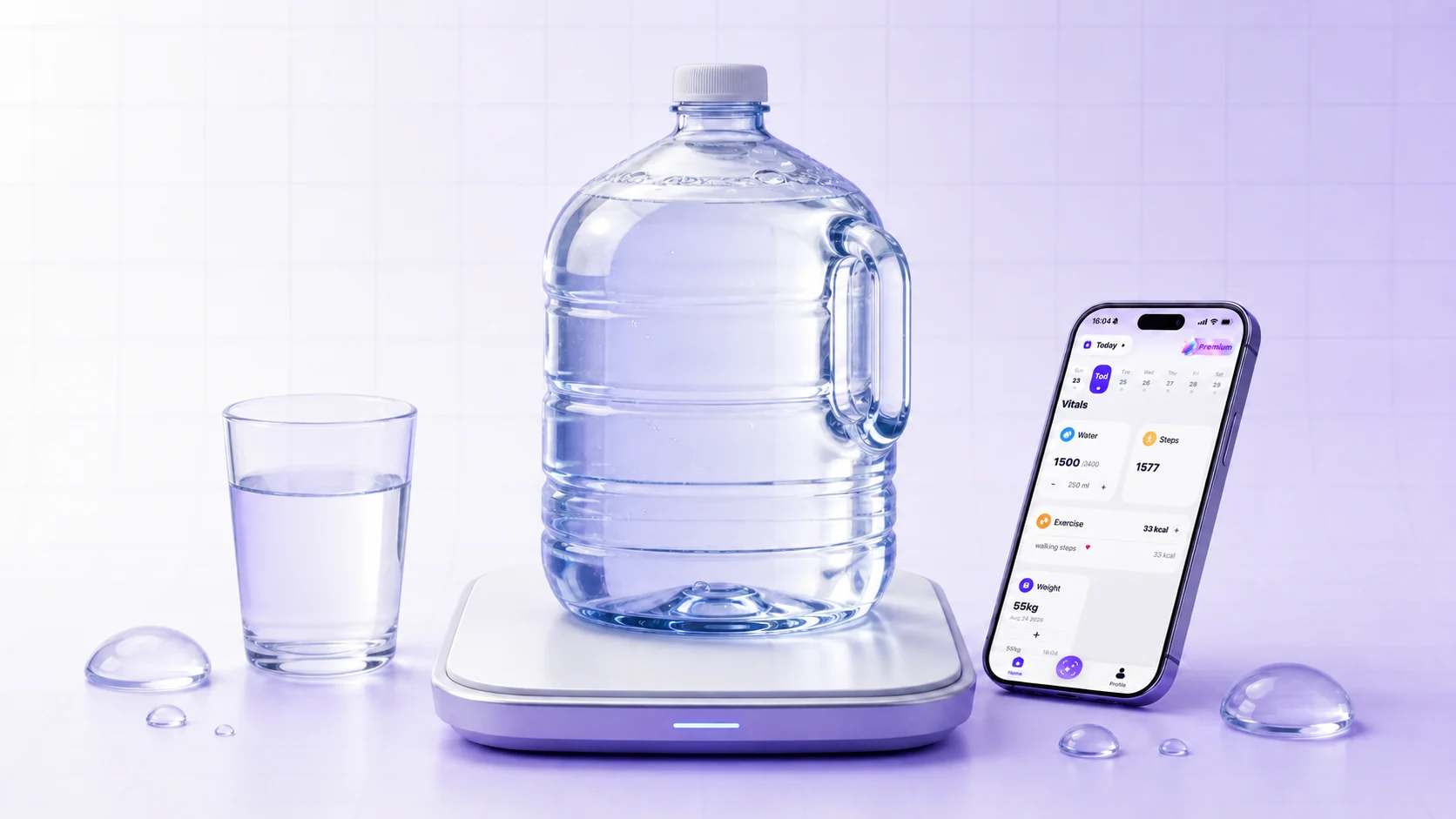
One U.S. liquid gallon of water weighs about 8.33 pounds (3.78 kilograms). The exact weight changes slightly with temperature. An Imperial gallon is larger and weighs about 10.0 pounds (4.54 kilograms).
A gallon of water is easy to picture but surprisingly heavy to carry. The number also appears in hydration challenges, home workouts, camping plans, emergency supplies, and searches for a how much water to drink a day calculator. This guide answers the conversion first, then puts it in a healthier context: a gallon is a unit of volume, not a universal daily drinking target.
How Much Does a Gallon of Water Weigh?
According to the U.S. Geological Survey, water weighs about 8.33 pounds per U.S. gallon, and one U.S. gallon equals 3.7854 liters. In everyday use, it is reasonable to round the answer to 8.3 pounds or 3.8 kilograms.
| Volume of water | Approximate weight |
|---|---|
| 1 U.S. gallon | 8.33 lb / 3.78 kg |
| 1/2 U.S. gallon | 4.17 lb / 1.89 kg |
| 1 U.S. quart | 2.08 lb / 0.95 kg |
| 1 U.S. pint | 1.04 lb / 0.47 kg |
| 1 liter | 2.20 lb / 1.00 kg |
Why the Exact Weight Can Change
Water density changes slightly with temperature. Cold water is generally a little denser than warm water, so the weight of a fixed gallon can vary slightly. For cooking, exercise planning, and everyday hydration, 8.33 pounds is accurate enough. Scientific or industrial work may require the exact temperature and pressure.
The container is not included in that figure. A full one-gallon bottle or jug will weigh more than 8.33 pounds once the bottle, cap, and handle are added.
U.S. Gallon vs. Imperial Gallon
The word gallon can refer to two different volumes. A U.S. liquid gallon contains 128 U.S. fluid ounces, or about 3.785 liters. An Imperial gallon, used historically in the United Kingdom and in some Commonwealth contexts, contains about 4.546 liters. That is why an Imperial gallon of water weighs roughly 10.0 pounds rather than 8.33 pounds.
Is a Gallon of Water the Right Daily Goal?
Not necessarily. A gallon is a convenient container size, but it is not a personalized hydration prescription. The National Academies established adequate intakes for total water of about 3.7 liters per day for adult men and 2.7 liters per day for adult women. These values include water from all beverages and moisture in food, not only plain drinking water. They are population-level reference values, not exact requirements for every person.
Your needs can change with age, body size, pregnancy or breastfeeding, physical activity, climate, fever, vomiting, diarrhea, diet, medications, and health conditions. The CDC notes that people generally need more water in hot climates, when they are more physically active, or when they are ill and losing fluids.
How Much Water to Drink a Day Calculator
A useful calculator should produce a starting estimate and make its assumptions visible. It should not present one number as a medical rule. The WellyPal Daily Water Intake Calculator applies the National Academies reference values below and keeps total water separate from the portion typically supplied by drinks.
Step 1: Choose a baseline
For healthy adults, the National Academies’ total-water reference values offer a practical baseline: approximately 3.7 liters for men and 2.7 liters for women. Remember that total water includes beverages and food moisture. The same report estimates that roughly 80% of total water commonly comes from water and other beverages, with the remainder coming from food.
| Reference | Total water | Usually from drinks |
|---|---|---|
| Adult men | 3.7 L / 125 fl oz | 3.0 L / 101 fl oz |
| Adult women | 2.7 L / 91 fl oz | 2.2 L / 74 fl oz |
| Pregnancy | 3.0 L / 101 fl oz | 2.3 L / 78 fl oz |
| Breastfeeding | 3.8 L / 128 fl oz | 3.1 L / 105 fl oz |
Step 2: Adjust for your day
- Add attention to fluids when exercise or heat increases sweating.
- Increase replacement when illness causes fever, vomiting, or diarrhea, following medical advice when symptoms are significant.
- Count water from other beverages and water-rich foods rather than treating plain water as the only source.
- Follow individualized clinical guidance if you are pregnant, breastfeeding, older, taking medications that affect fluid balance, or managing kidney, heart, liver, or endocrine conditions.
Step 3: Observe the pattern
Use thirst, regular access to fluids, activity, weather, and how you feel as practical context. Urine color can offer a rough clue, but it is affected by foods, supplements, and medicines and should not be treated as a diagnosis. Severe thirst, confusion, fainting, persistent vomiting, very low urine output, or suspected heat illness warrants prompt medical attention.
How WellyPal Makes Hydration Easier to Understand
A calculator is most useful when its estimate becomes part of an everyday routine. WellyPal connects water tracking with the same health picture you already use for meals, nutrients, activity, weight, and habits. Instead of remembering isolated cups or chasing a gallon challenge, you can record what you drink and see how hydration fits the rest of your day.
- Set a practical daily water target that reflects your routine.
- Log water as you go, alongside meals and activity.
- View progress in a clear dashboard rather than adding cups manually.
- Notice patterns across active days, hotter days, meals, and recovery.
- Use WellyPal’s AI health coach for personalized, practical prompts based on your goals and logged habits.
This makes hydration feel less like a standalone rule and more like one visible part of your overall health pattern. Start with the daily water reference calculator, then use your ongoing dashboard to understand how hydration fits your real routine.
How Much of the Human Body Is Water?
Adults are commonly about 50% to 60% water by body weight, but age, body composition, hydration status, and measurement method all influence the estimate. That percentage is not a daily drinking target. Read the full guide to what percentage of the human body is water for the ranges, calculation example, fluid compartments, and measurement limitations.
Frequently Asked Questions
Does one gallon of water weigh exactly 8 pounds?
No. One U.S. gallon of water weighs about 8.33 pounds. Eight pounds is a convenient but low estimate.
How much does a five-gallon container of water weigh?
The water alone weighs about 41.65 pounds. Add the weight of the container to estimate the total carrying weight.
Should I drink one gallon of water every day?
Not automatically. Daily needs vary, and total water includes beverages and food. Use an evidence-based starting point, adjust for your circumstances, and follow medical advice if you have a condition that affects fluid balance.
Can coffee, tea, milk, or food count toward hydration?
Yes. Total water includes water from beverages and foods. Plain water remains a convenient, calorie-free choice, but it is not the only source.
Can a water calculator tell me exactly how much to drink?
A calculator can provide a useful estimate, but it cannot fully account for weather, sweat rate, illness, medications, food, or medical conditions. Treat the result as a starting point and monitor your real-world pattern.
Make Hydration Visible, Not Complicated
The key number is simple: a U.S. gallon of water weighs about 8.33 pounds. The more important lesson is that a gallon is a unit of volume, not a universal hydration goal. Start with a credible intake reference, adjust for your day, and track consistently instead of forcing an arbitrary target.
Sources
- U.S. Geological Survey, “Facts About Water”: https://www.usgs.gov/water-science-school/science/facts-about-water
- National Academies Press, “Dietary Reference Intakes for Water”: https://nap.nationalacademies.org/catalog/10925/
- CDC, “About Water and Healthier Drinks”: https://www.cdc.gov/healthy-weight-growth/water-healthy-drinks/
- NCBI Bookshelf, “Physiology, Body Fluids”: https://www.ncbi.nlm.nih.gov/books/NBK482447/
This resource provides general wellness education and product information. It is not medical advice. Hydration needs vary, and people with medical fluid restrictions or conditions that affect fluid balance should follow individualized clinical guidance.
Build a clearer daily picture with WellyPal
Track water together with food, nutrients, activity, weight, and habits in one place.
Get WellyPal Free