What Percentage of the Human Body Is Water?
A clear guide to the familiar 60% figure, why your percentage may differ, and what body water does—and does not—tell you about hydration.
Published
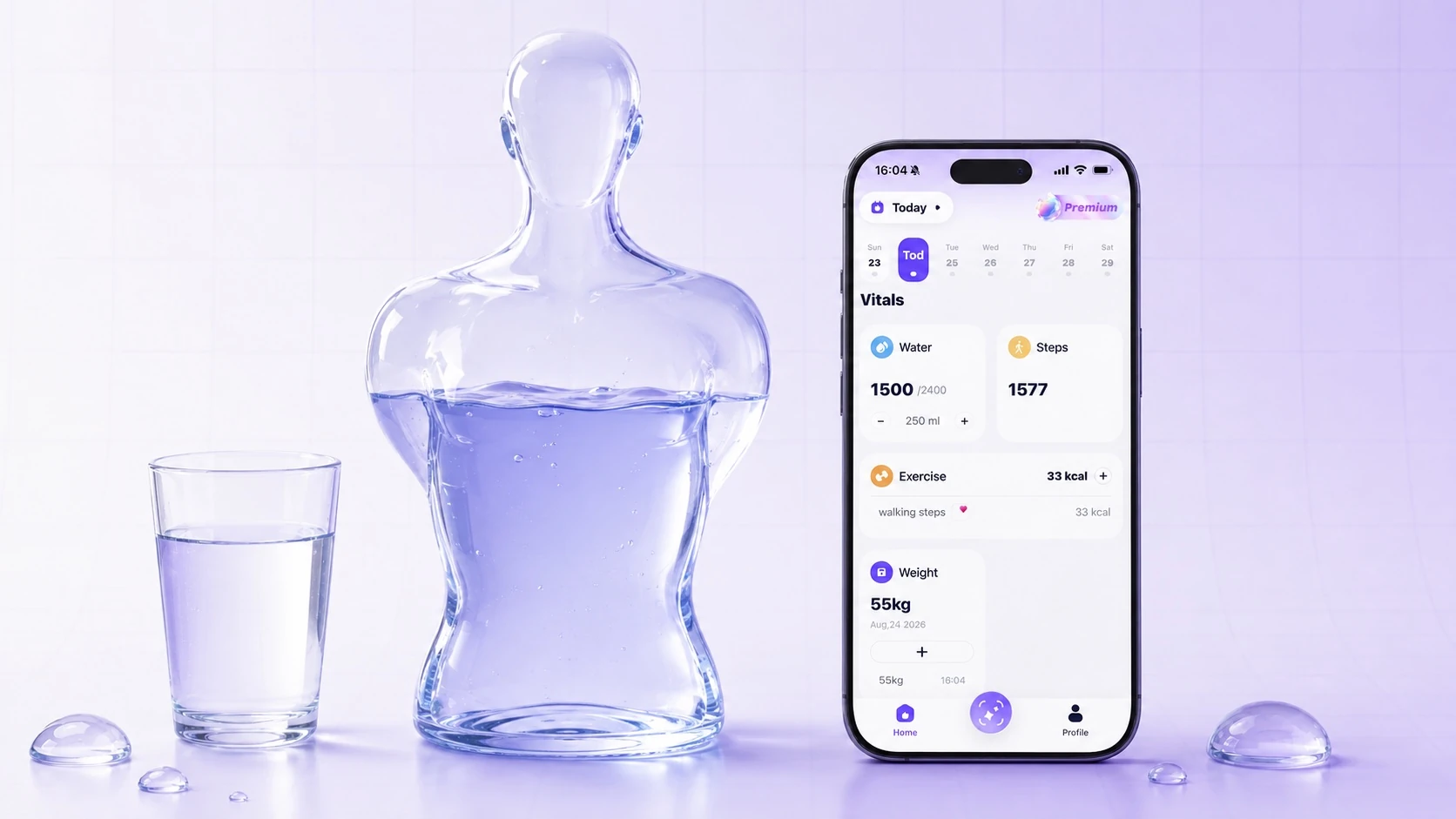
How Much of the Human Body Is Water?
The adult human body is commonly about 50% to 60% water by body weight. That is a useful general range, not one exact percentage for every person.
Infants usually have a higher proportion of body water, while older age and a higher proportion of body fat are generally associated with a lower percentage. Hydration status also changes over time, so the number is not fixed throughout life—or even perfectly constant from day to day.
Important distinction: Body-water percentage describes how much of your body mass is water. It is not a target telling you what percentage of your body weight to drink each day.
Why Body-Water Percentage Varies
OpenStax describes body water as roughly 75% of body mass in infants, about 50% to 60% in adults, and sometimes as low as 45% in older age. These broad ranges reflect changes in the tissues that make up the body.
| Factor | General pattern | Why it matters |
|---|---|---|
| Age | Higher in infancy; often lower later in life | The proportions of fat-free tissue, fat, and other tissues change across the lifespan. |
| Body composition | Often higher with more fat-free mass | Lean tissue contains more water than adipose tissue. |
| Hydration status | Moves with fluid intake and losses | Sweat, urine, breathing, illness, and intake continually affect fluid balance. |
| Measurement method | Results can differ | Clinical tracer methods and consumer bioelectrical-impedance devices do not measure in the same way. |
This is why “the body is 60% water” should be read as a memorable population-level approximation rather than a personal diagnosis or ideal score.
What Does “60% Water” Mean?
The percentage refers to water as a share of total body weight. A rough illustration uses this simple relationship:
For example, 50% to 60% of a 70 kg (154 lb) adult’s body weight is about 35 to 42 kg (77 to 92 lb). Because one liter of water weighs about one kilogram, that is roughly 35 to 42 liters as an educational estimate.
Where Is Water Stored in the Body?
Body water is not held in one tank. It is distributed across fluid compartments. NCBI’s physiology reference describes intracellular fluid—the fluid inside cells—as about 40% of total body weight and extracellular fluid as about 20% in a typical adult. Together, those broad proportions help explain the familiar 60% estimate.
Inside cells
Intracellular fluid supports the chemical reactions and stable environment cells need to function.
Outside cells
Extracellular fluid includes blood plasma and the fluid between cells, helping transport substances and maintain circulation.
Water also helps regulate temperature, transport nutrients and waste, lubricate joints, form saliva, and protect sensitive tissues. Different organs and tissues contain different proportions, so a whole-body percentage should not be applied equally to every body part.
Body-Water Percentage Is Not the Same as Hydration Status
A person can have a typical estimated body-water percentage and still become dehydrated after fluid loss. The reverse is also important: trying to force body water upward by drinking very large amounts is not a safe or useful goal. The body regulates fluid and electrolytes through thirst, the kidneys, hormones, breathing, sweat, and other losses.
Consumer smart scales sometimes display a body-water percentage using bioelectrical impedance. Treat it as an estimate. Results can shift with recent drinking, meals, exercise, skin temperature, time of day, and device equations. A single reading should not be used to diagnose dehydration, fluid overload, or a medical condition.
How Body Water Can Affect Scale Weight
Water is part of body weight, so temporary changes in fluid balance can move the scale without representing the same amount of body-fat change. Sodium, carbohydrate intake, digestion, exercise, menstrual-cycle changes, heat, and weigh-in timing can all contribute to short-term variation.
If your weight changes suddenly, compare several readings taken under similar conditions instead of interpreting one number alone. Read why weight can go up overnight for a fuller explanation of short-term fluctuations.
Does Being 50% to 60% Water Tell You How Much to Drink?
No. Your body-water percentage and your daily water intake are different questions. The National Academies’ adult reference values cover total water from plain water, other beverages, and moisture in food. They are population references, not prescriptions based on a percentage of body weight.
Climate, activity, pregnancy, breastfeeding, illness, medications, food, and health conditions can change what is appropriate. Use the WellyPal Daily Water Intake Calculator to see the adult reference values and their assumptions rather than converting your estimated body-water percentage into a drinking target.
Wondering about gallon-based hydration goals? See how much a gallon of water weighs and why a gallon is not a universal daily goal.
How WellyPal Helps Make Hydration Visible
WellyPal does not measure your total body water or diagnose dehydration. It helps you turn hydration into a visible daily habit by keeping water, food, activity, and weight in one connected iPhone dashboard.
- Start with a practical reference. Use the water calculator as an educational baseline, not a rigid prescription.
- Log water as you go. Record drinks during the day instead of reconstructing the total at night.
- Keep context together. Review water alongside activity, meals, exercise, and weight rather than treating it as an isolated number.
- Look for repeatable patterns. Notice whether active, hot, travel, or high-sodium days change your usual routine or short-term weight trend.
- Ask for a practical next step. WellyPal’s AI Coach can use the habits you record to support general wellness decisions; it is not a substitute for medical assessment.
Frequently Asked Questions
Is the human body 60% or 70% water?
For adults, about 50% to 60% is a more useful general range. Higher values are more typical earlier in life, and individual estimates vary with age, body composition, hydration status, and measurement method.
Can body-water percentage change from day to day?
Yes. Fluid intake and losses can shift hydration and scale readings, although consumer devices may also vary because of measurement conditions. A multi-day pattern is more informative than one reading.
Should I drink more to raise my body-water percentage?
Do not chase a percentage by forcing fluids. Drinking needs vary, and excessive intake can be harmful. Use general intake references as context and follow individualized clinical guidance when relevant.
Can WellyPal measure body-water percentage?
No. WellyPal tracks the water, food, activity, and weight information you record. It does not measure body composition, total body water, dehydration, or fluid overload.
The Bottom Line
The adult human body is commonly about 50% to 60% water by weight, but there is no single correct percentage for everyone. Age, body composition, hydration status, and measurement method all influence the estimate.
Use that number to understand the importance of water—not as a personal drinking prescription. A better everyday approach is to start with a credible intake reference, record what you actually drink, and interpret hydration alongside activity, meals, and weight trends.
Sources
- OpenStax: Body Fluids and Fluid Compartments
- U.S. Geological Survey: The Water in You: Water and the Human Body
- NCBI Bookshelf: Physiology, Body Fluids
- PubMed Central: Body Water Percentage From Childhood to Old Age
- National Academies: Dietary Reference Intakes for Water
This article provides general wellness education and product information. It is not medical advice and cannot diagnose dehydration, fluid overload, or a body-composition condition. Fluid needs and body-water estimates vary. Follow individualized clinical guidance if you have kidney, heart, liver, or endocrine disease; take medicines that affect fluid balance; are pregnant or breastfeeding; or have been told to limit fluids.
Turn Hydration From a Fact Into a Daily Habit
Track water alongside meals, activity, exercise, and weight so you can see the pattern that matters in your real day.
Track Water With WellyPal