What Fruits Are in Season Right Now? A Seasonal Fruit List for Every Season
A practical guide to spring, summer, fall, and winter fruit—plus an easier way to track fruit, sugar, fiber, and your overall nutrition with WellyPal.
Updated
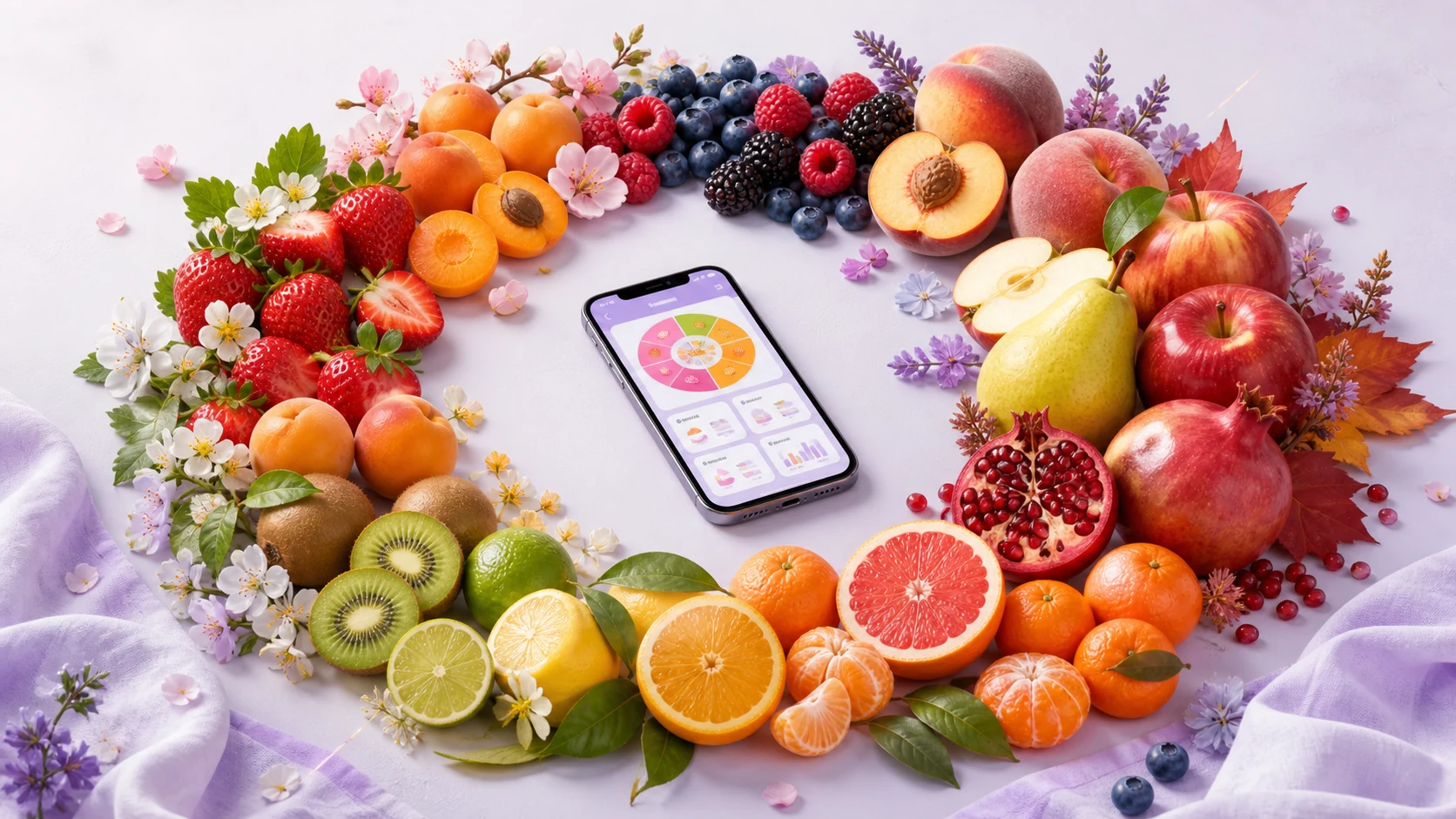
What Fruits Are in Season Right Now?
The answer depends on your location and the time of year. In much of the United States and the Northern Hemisphere, spring is known for strawberries and apricots; summer brings berries, cherries, peaches, plums, melons, and grapes; fall is a strong season for apples, pears, cranberries, and pomegranates; and winter is associated with citrus fruits, kiwifruit, pears, and pomegranates.
That is a useful starting point, not a fixed calendar. Growing conditions, weather, variety, storage, imports, and local harvest schedules can shift availability. The Southern Hemisphere follows roughly opposite seasons, and tropical regions may have very different cycles. For the most accurate answer to “what fruits are in season right now,” check a local farmers market, grocery store, farm stand, or regional agriculture guide.
Seasonal Fruit List at a Glance
| Season | Typical months* | Common fruits in season |
|---|---|---|
| Spring | March–May | Strawberries, apricots, kiwifruit, lemons, limes, pineapples |
| Summer | June–August | Blackberries, blueberries, cherries, grapes, mangos, peaches, plums, raspberries, strawberries, cantaloupe, honeydew, watermelon |
| Fall | September–November | Apples, cranberries, grapes, kiwifruit, pears, pomegranates, raspberries |
| Winter | December–February | Grapefruit, oranges, lemons, limes, kiwifruit, pears, pomegranates |
| Available much of the year | Varies | Apples, avocados, bananas, lemons, limes, pineapples, and imported or stored fruit |
*Months are a broad Northern Hemisphere and U.S. reference. Local seasons may begin earlier, end later, overlap, or differ completely.
Spring Fruits
Spring is a transition season. Depending on the region, winter citrus may still be available while the first berries and stone fruits begin to appear.
Common spring fruits
- Strawberries
- Apricots
- Kiwifruit
- Lemons and limes
- Pineapples
- Blackberries in warmer areas or later spring
Try strawberries with plain yogurt, add kiwifruit to oatmeal, or use citrus to brighten water, salads, and homemade dressings. Pairing fruit with yogurt, cottage cheese, nuts, or another protein source can make a snack more satisfying.
Summer Fruits
Summer usually offers the widest variety of fresh fruit in many U.S. regions. Berries, stone fruit, grapes, and melons are common choices, although exact timing depends on climate and location.
Common summer fruits
- Blackberries, blueberries, raspberries, and strawberries
- Cherries
- Peaches, nectarines, apricots, and plums
- Watermelon, cantaloupe, and honeydew
- Grapes
- Mangos and pineapples
Summer fruit works well as a simple snack, in salads, with overnight oats, or frozen for smoothies. A large smoothie can contain several servings of fruit, so logging the ingredients can help you understand the total carbohydrates, fiber, sugar, and calories without labeling the drink as automatically “good” or “bad.”
Fall Fruits
Fall is strongly associated with orchard fruit and several tart or jewel-colored options. Apples and pears store well, which is one reason they may remain widely available beyond their local harvest window.
Common fall fruits
- Apples
- Pears
- Grapes
- Cranberries
- Pomegranates
- Kiwifruit
- Raspberries in some regions
For an easy snack, combine sliced apple or pear with nut butter, cheese, or yogurt. Fresh cranberries are very tart and are often prepared with added sweetener, so the full recipe matters more than the fruit name alone when you review sugar and calories.
Winter Fruits
Winter is a natural time for citrus in many markets. Oranges, grapefruit, lemons, and limes can add flavor when fewer local summer fruits are available. Kiwifruit, pears, and pomegranates may also be in season or widely available.
Common winter fruits
- Oranges, mandarins, and tangerines
- Grapefruit
- Lemons and limes
- Kiwifruit
- Pears
- Pomegranates
- Apples from storage
Whole citrus segments retain fiber that juice does not provide in the same way. Juice can still fit into an overall eating pattern, but it is easy to drink quickly and may be less filling than whole fruit. Consider your portion and the rest of the meal rather than treating one format as universally right or wrong.
A Practical List of the Fruits
No short page can contain every botanical fruit or every regional variety, but the following list of fruits covers many common grocery-store and market choices. Use it as a planning prompt rather than a rulebook.
A–D
- Apples, apricots, avocados, bananas, blackberries, blueberries, cantaloupe, cherries, clementines, coconuts, cranberries, dates, and dragon fruit
F–L
- Figs, grapefruit, grapes, guava, honeydew, kiwifruit, kumquats, lemons, and limes
M–P
- Mangos, nectarines, oranges, papayas, passion fruit, peaches, pears, persimmons, pineapples, plantains, plums, and pomegranates
R–W
- Raspberries, star fruit, strawberries, tangerines, and watermelon
Some items—such as avocado, coconut, and plantain—are botanically fruits but are often used differently in everyday meals. Nutrition also varies substantially across fruits and portions, so the category name alone does not tell you the full nutritional story.
Is Seasonal Fruit Healthier?
Seasonal fruit may be fresher, more flavorful, easier to find locally, or better priced during peak supply. However, “seasonal” does not automatically mean more nutritious in every situation, and fruit does not become unhealthy simply because it is frozen, canned, dried, stored, or imported.
Fresh, frozen, canned, and dried fruit can all contribute to a varied eating pattern. Check the package for added sugar, syrup, sodium, and serving size. Frozen fruit without added sugar can be a convenient year-round option; canned fruit packed in water or juice may be useful when fresh fruit is unavailable; dried fruit is concentrated and therefore easier to eat in larger amounts than intended. Use our fruit snack comparison to evaluate packaged formats in more detail.
How Much Fruit Should You Eat?
There is no single fruit amount that is correct for everyone. Needs vary with age, total energy needs, activity, health conditions, medications, pregnancy, and the rest of the diet. Portion context also matters: a few berries, a large smoothie, dried fruit, and fruit juice do not represent the same volume or eating experience.
Instead of trying to find one perfect fruit or universal serving, aim for variety and notice how fruit fits alongside protein, vegetables, grains, fats, and your personal goals. If you have diabetes, kidney disease, food allergies, gastrointestinal concerns, or another condition that affects food choices, seek individualized advice from a qualified professional.
How WellyPal Makes Fruit Tracking Easier
A seasonal fruit list can help you decide what to buy. WellyPal helps you understand how that choice fits into the rest of your day. On iPhone, you can photograph a fruit snack or describe it by voice instead of repeatedly searching for every item. Review the estimate, adjust the fruit or portion when necessary, and keep moving.
The WellyPal nutrition dashboard brings calories, protein, carbohydrates, fat, fiber, sugar, and sodium into one clear view. That matters because fruit is not just “sugar.” Whole fruit can also contribute fiber, water, vitamins, minerals, and variety, while the total nutrition of a snack depends on the type, portion, preparation, and foods paired with it.
WellyPal's AI Coach can connect the fruit you recorded with your broader pattern. If breakfast was low in fiber, fruit may help add variety and fiber. If a fruit-only snack does not keep you satisfied, the next option might pair fruit with yogurt, nuts, cottage cheese, or another protein source. If sugar is already high because of sweetened drinks and desserts, the useful next step may be to review the entire day—not to fear a single apple.
A Simple Seasonal Fruit Routine
Check what is abundant, ripe, and reasonably priced in your local market.
Choose two or three fruits you genuinely enjoy instead of buying a long aspirational list.
Plan one realistic use for each fruit: breakfast, snack, salad, dessert, or freezer.
Store it where you can see it, and freeze ripe extras before they spoil.
Log the fruit with WellyPal by photo or voice and review the complete nutrition dashboard.
Use the AI Coach to choose one practical adjustment based on your full day, not one isolated number.
Frequently Asked Questions
What fruit is in season right now?
It depends on your location and month. In many U.S. regions, berries and stone fruit are common in summer, apples and pears in fall, and citrus in winter. Spring often brings strawberries, apricots, and transitional availability. Local market signs and regional agriculture resources provide the most accurate answer.
What fruits are available all year?
Bananas, apples, avocados, lemons, limes, and pineapples are often available for much of the year because they are grown in different regions, imported, or stored. Availability is not the same as a local harvest season.
Is frozen fruit as good as fresh fruit?
Frozen fruit can be a nutritious and convenient option, especially when it has no added sugar. The best choice depends on availability, price, storage, preparation, and how you will actually use it.
Should I avoid fruit because it contains sugar?
For most people, whole fruit can fit into a balanced eating pattern. Fruit provides more than sugar, and its effect depends on the fruit, portion, form, and overall diet. People with a medical condition or prescribed carbohydrate plan should follow individualized professional advice.
How can I track a mixed fruit bowl or smoothie?
With WellyPal, take a clear photo or describe the ingredients and approximate amounts by voice. Review the estimate because blended portions, added juice, yogurt, sweeteners, and toppings can change the result. Correct obvious errors before using the dashboard or AI Coach guidance.
Is there a complete list of the fruits?
There are thousands of fruit species and regional varieties, so no short consumer list is truly complete. Use a practical list of common fruits for meal planning, then explore locally available varieties by season.
Choose Seasonal Fruit—and See the Whole Day
Seasonal fruit can add flavor, variety, and convenience to meals and snacks, but there is no need to chase a perfect list. Start with what is ripe, affordable, and enjoyable where you live. Then use WellyPal to record it with less effort, see how it contributes to your complete nutrition picture, and turn the data into one realistic next step.
WellyPal is not a medical provider and does not replace advice from a doctor, registered dietitian, or other qualified professional. If you have a medical condition, special dietary restriction, pregnancy-related nutrition need, eating disorder risk, or medical nutrition concern, consult a qualified professional. Calorie, nutrient, activity, and AI estimates are intended for general wellness education and everyday tracking, not diagnosis, treatment, or a professional nutrition prescription.
See How Fruit Fits the Whole Day
Log seasonal fruit by photo or voice and review calories, carbohydrates, fiber, sugar, and the rest of your nutrition in one dashboard.
Get WellyPal Free