Are Fruit Snacks Healthy? How They Compare With Whole Fruit
A practical guide to packaged fruit snacks, whole fruit, label reading, balanced pairings, and lower-friction tracking with WellyPal.
Published
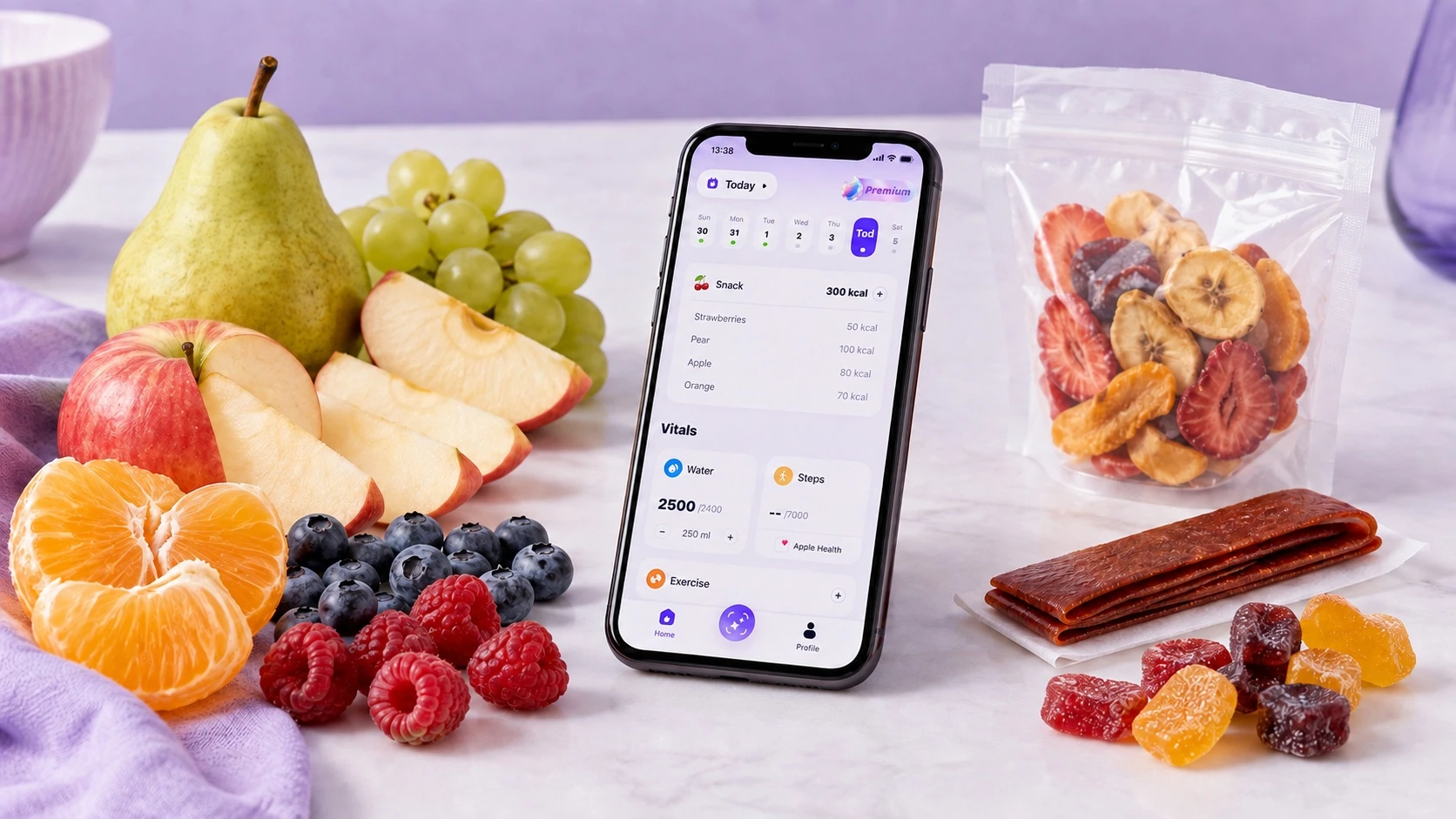
Are Fruit Snacks Healthy? The Short Answer
Fruit snacks are a broad category, so the answer depends on the product. Whole fruit, dried fruit, fruit cups, fruit leather, and gummy-style snacks can have very different ingredients, portions, fiber, and added-sugar content.
For an everyday default, whole fruit is often the more informative choice because you can see what the food is, and it commonly contributes fiber, water, vitamins, minerals, and natural sweetness. Packaged fruit snacks can still fit a flexible eating pattern. The practical question is what is in the product, how much you are eating, and how it fits with the rest of your day.
Quick check: Look at the serving size, first ingredients, added sugars, and dietary fiber. Compare the product with the snack you actually want—not with the healthiest food you can imagine.
What Counts as a Fruit Snack?
People use the phrase fruit snacks to describe several different foods. Separating the formats makes comparisons more useful:
- Whole fruit: fresh or frozen fruit with no added ingredients.
- Unsweetened dried fruit: fruit with much of its water removed, making the portion more concentrated than fresh fruit.
- Fruit cups and pouches: products that may be packed in water, juice, purée, or syrup.
- Fruit leather or fruit bars: compressed or puréed fruit products that may contain concentrates or added sweeteners.
- Chewy or gummy fruit snacks: candy-like packaged products whose ingredients and nutrient profiles vary widely by brand.
The name on the front is marketing shorthand, not a complete nutrition profile. Two products sold in the same aisle may have different serving sizes, ingredient lists, added sugars, and fiber.
Fruit Snacks vs. Whole Fruit: A Practical Comparison
| Format | What it may offer | What to check | Practical use |
|---|---|---|---|
| Fresh or frozen whole fruit | Visible ingredients; often water and fiber | Portion and any toppings | Everyday snack, breakfast, or meal side |
| Unsweetened dried fruit | Portable and shelf-stable | Small serving size; concentrated carbohydrate; added sugar | Travel, desk drawer, or pairing with nuts |
| Fruit cup or pouch | Convenient and portioned | Packing liquid, added sugars, and fiber | Lunchbox or backup snack |
| Fruit leather or bar | Compact and easy to carry | First ingredients, added sugars, fiber, and servings per package | Occasional portable option |
| Chewy fruit snacks | Shelf-stable and familiar | Serving size, added sugars, fiber, and ingredient list | Treat-like snack or convenience item |
Products vary. Use the label on the specific package rather than assuming every item in a format is the same.
How to Read a Fruit Snack Label in 60 Seconds
- Start with serving size. FDA explains that serving size reflects how much people typically consume; it is not a recommendation. Check whether the package contains one serving or several.
- Read the first ingredients. Ingredients appear in descending order by weight. Notice whether fruit, fruit purée, or another ingredient leads the list, and identify sweeteners or concentrates.
- Separate total sugars from added sugars. Total sugars include naturally occurring and added sugars. FDA uses 5% Daily Value or less as low and 20% or more as high for a nutrient per serving.
- Check dietary fiber. A fruit name or flavor does not tell you how much fiber the product provides. Compare similar products using the same serving size.
- Match the product to its purpose. Consider convenience, appetite, allergies, budget, and the rest of your eating pattern.
See the FDA's official guidance on added sugars and serving size.
How to Build a Fruit and Snack Combination
Start with a fruit you enjoy, then decide whether you need anything else based on hunger, timing, convenience, and the next meal. Pairing fruit with a protein food or source of fat can make the snack more substantial, while a small fruit-only snack may be enough when a meal is coming soon.
- Apple or banana with peanut, almond, or sunflower-seed butter
- Berries with plain Greek yogurt or soy yogurt
- Grapes or pear slices with cheese
- Orange segments with nuts or roasted chickpeas
- Unsweetened dried fruit with nuts or seeds
- A fruit cup packed in water or juice with yogurt or a cheese stick
Choose alternatives that fit allergies, dietary preferences, texture needs, and availability. For more ideas, explore WellyPal's high-protein snacks and seasonal fruit guide.
When Packaged Fruit Snacks Can Be Practical
Packaged fruit snacks may be useful when refrigeration, preparation time, or fresh produce is limited. They can serve as a travel backup, lunchbox item, or easy portion to keep at work. Convenience is a real benefit; it does not need to be disguised as nutritional perfection.
A product made mostly from fruit is different from a gummy product flavored or sweetened with fruit-derived ingredients. Both can fit, but they play different roles. Treat the Nutrition Facts panel and ingredient list as the deciding information.
How WellyPal Helps You Track Fruit Snacks
The label helps you understand one package. WellyPal helps you see how that snack fits into the rest of your day. On iPhone, start with a photo, voice description, or text entry, then review the estimate before saving it.
- Log the snack quickly. Photograph a whole-fruit snack or describe a packaged item by voice.
- Review the result. Confirm the brand, serving size, and label values when they matter.
- See the complete nutrition view. Review calories, carbohydrates, protein, fat, fiber, sugar, and sodium together with your daily goals.
- Look for repeatable patterns. Notice whether usual snacks add fruit and fiber and which pairings fit your appetite and schedule.
- Ask AI Coach for a realistic next step. See how the snack fits with the meals, activity, and goals logged that day.
Keep estimates reviewable: A meal photo cannot reliably reveal every ingredient, sweetener, brand, or exact portion. Correct important details before relying on the nutrition dashboard or AI guidance.
Want a lighter workflow? Read how to log food faster or learn how WellyPal works.
A Simple Decision Guide
- Choose whole fruit when you want a simple default with visible ingredients.
- Choose unsweetened dried fruit when portability matters, and pay attention to the smaller, concentrated portion.
- Choose cups or pouches when convenience matters, then compare the packing liquid, added sugars, and fiber.
- Choose chewy fruit snacks when you enjoy them or need a shelf-stable option, recognizing that they may function more like a sweet snack than a serving of whole fruit.
- Use WellyPal when you want to understand how the choice fits the complete day rather than judging the package in isolation.
Frequently Asked Questions
Are fruit snacks the same as fruit?
Not necessarily. Whole fruit, dried fruit, fruit leather, fruit cups, and gummy fruit snacks are different formats. Check the ingredients, serving size, added sugars, and fiber on the specific product.
Are gummy fruit snacks healthy?
There is no universal answer because formulas vary. Many gummy-style products are closer to a sweet, shelf-stable snack than to whole fruit. Compare the serving size, added sugars, fiber, and ingredients.
Is dried fruit a good snack?
Unsweetened dried fruit can be convenient and can fit a balanced pattern. Because water has been removed, the portion is smaller and more concentrated than fresh fruit. Check for added sugars.
What is a good fruit and snack combination?
Try fruit with yogurt, cheese, nuts, seeds, nut butter, or roasted chickpeas. Choose a pairing that fits your hunger, schedule, dietary needs, and preferences.
Can WellyPal track fruit snacks?
Yes. Log a snack by photo, voice, or text, review the estimated calories and nutrients, correct packaged-product details, and see how the entry changes your daily nutrition dashboard.
The Bottom Line
Fruit snacks are not one food. Whole fruit, dried fruit, fruit cups, fruit leather, and gummy products should be compared by format and label—not by name alone. Whole fruit is a practical everyday default, while packaged options can add convenience and flexibility.
WellyPal can turn that decision into a usable routine: log the snack with less effort, review the estimate, see the full nutrition picture, and use AI Coach to choose a realistic next step.
Sources
This article provides general nutrition and wellness information and is not medical advice. Food needs vary by age, health conditions, allergies, medications, pregnancy, activity, and personal goals. WellyPal calorie, nutrient, and AI estimates depend on the food, brand, portion, preparation, and information you provide. Review estimates and consult a qualified healthcare professional for individualized guidance.
See How Your Next Snack Fits Your Day
Photograph it or describe it by voice, review the estimate, and see calories, fiber, sugar, protein, and more in one clear WellyPal dashboard.
Track Your Next Snack