Why Did My Weight Go Up Overnight? Do Not Blame Yourself Too Quickly
Understand short-term scale changes without blaming yourself or overreacting.
Updated
Why Can Weight Go Up Overnight?
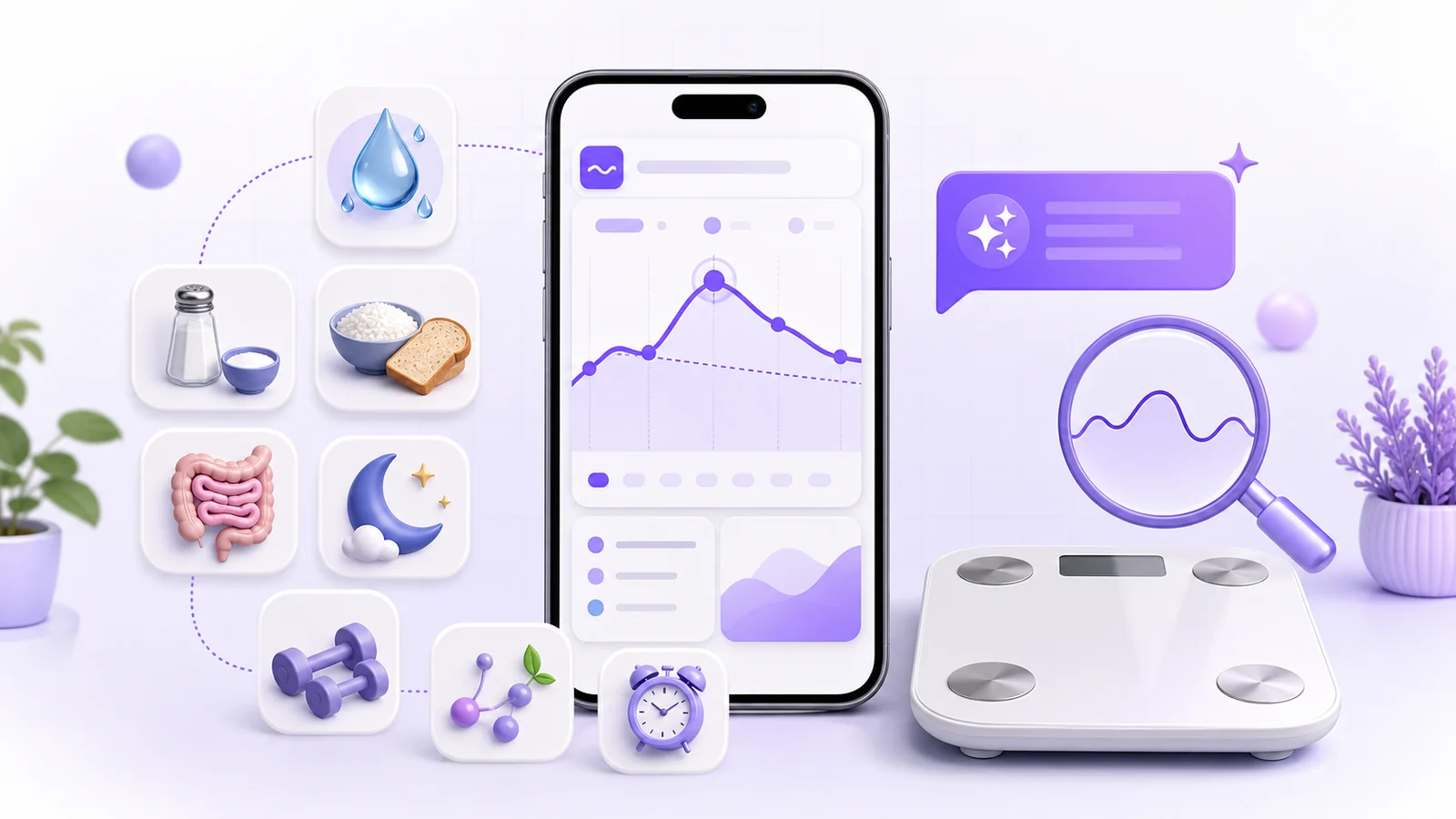
If your weight went up overnight, it does not automatically mean you gained fat. Short-term weight changes are often affected by water, sodium, carbohydrates, digestion, sleep, exercise, hormones, and weigh-in timing.
If the scale suddenly goes up, do not rush to blame yourself. A better approach is to look at the trend over several days and consider recent food, activity, sleep, and tracking patterns. WellyPal can help users track weight trends instead of reacting emotionally to one daily number.
Who This Page Is For
This page is for people searching questions like:
- Why did my weight go up overnight?
- I ate more yesterday. Did I gain fat today?
- Does sudden weight gain mean my weight-loss plan failed?
- Are weight fluctuations normal?
- How can I look at weight trends without daily anxiety?
- How can food logs help explain weight changes?
Why Weight Fluctuates Day to Day
Body weight is not only body fat. It is the total of many things in the body, including water, food, digestion contents, glycogen, sodium, muscle status, and hormonal changes.
That means weight can move up or down within a day or two even when body fat has not meaningfully changed. For most users, the meaningful signal is the trend over time, not one isolated number.
Common Reasons
Reason 1: Higher Sodium Intake
If you ate takeout, restaurant food, salty foods, or processed foods the day before, your body may temporarily hold more water, causing the scale to go up.
Reason 2: More Carbohydrates Than Usual
Carbohydrates are connected with glycogen and water storage in the body. If you ate more rice, pasta, bread, desserts, or snacks than usual, your weight may temporarily rise the next day.
Reason 3: Food and Digestion Are Still in Your Body
If you ate later, ate a larger meal, or digestion is slower than usual, the scale may be higher the next morning. This does not automatically mean fat gain.
Reason 4: Water Changes After Exercise
Harder workouts can lead to muscle repair and short-term water changes. Sometimes the scale goes up after exercise even when your habits are improving.
Reason 5: Poor Sleep or Stress
Poor sleep and stress can affect water balance, appetite, and how the body feels. They can also contribute to short-term weight fluctuation.
Reason 6: Different Weigh-In Timing
Morning vs. evening, before vs. after meals, and before vs. after exercise can all produce different numbers. Inconsistent weigh-in conditions make fluctuations look larger.
Common Weight Fluctuation Mistakes
Mistake 1: Treating One-Day Weight Gain as Fat Gain
When weight increases noticeably overnight, it is often related to water and digestion rather than fat.
Mistake 2: Immediately Restricting Food After the Scale Goes Up
Cutting food dramatically after one higher number can increase stress and hunger, making healthy routines harder to maintain.
Mistake 3: Weighing Many Times in One Day
Frequent weigh-ins can create anxiety. Body weight naturally changes throughout the day.
Mistake 4: Looking Only at Weight and Ignoring Behavior
If your food logging is more consistent, your restaurant choices are improving, or your activity is more regular, those behavior changes still matter even if the scale does not move every day.
What to Do When Your Weight Goes Up
Step 1: Check Whether It Looks Like a Short-Term Fluctuation
Do not judge the whole plan from one day. Watch the next few days and see whether weight naturally settles or stabilizes.
Step 2: Review Yesterday’s Food
Think about whether you ate more sodium, more carbohydrates, a later meal, or a larger portion than usual. This can help explain the number.
Step 3: Keep Tracking Normally
Do not stop logging because the scale went up. Continue tracking food, water, activity, and weight so the trend becomes clearer.
Step 4: Return to a Normal Eating Structure
Choose a next meal with protein, vegetables or fiber, a reasonable amount of carbs, and water. Do not respond to one number with extreme restriction.
Step 5: Weigh Under Consistent Conditions
If you track weight, try to weigh at the same time and under similar conditions, such as in the morning after using the bathroom. This makes the data easier to compare.
How WellyPal Helps You Track Weight Trends
WellyPal is an AI health tracking app that helps users log meals, track weight, and get practical guidance from an AI Coach. In weight fluctuation situations, WellyPal helps users understand weight as a trend instead of overreacting to one daily number.
WellyPal can help users:
- Track long-term weight changes
- Connect weight changes with food logs
- Understand the impact of eating out, sodium, carbohydrates, and weigh-in timing
- Ask AI Coach what to do after a surprising weigh-in
- Avoid quitting because of one number
- Focus on long-term habits instead of short-term fluctuations
Overnight Weight Change Examples
Example 1: Weight Went Up After Takeout
If you ate a salty takeout meal yesterday, a higher number the next morning may be related to sodium and water. Continue tracking normally and watch the next few days.
Example 2: Weight Is Higher After a Weekend Meal
Weekend meals often include more food, carbohydrates, and sodium. A scale increase does not automatically mean fat gain. Return to your normal structure first.
Example 3: Weight Went Up After a Workout
If you had a harder workout, muscle repair and water changes may temporarily increase weight. The trend matters more than one day.
Example 4: Weight Has Not Dropped, but Tracking Is More Consistent
If you are logging meals more consistently and making clearer food choices, that is still progress. Weight changes may take longer to show.
A Healthier Way to Think About Weight
Weight is useful, but it is not the only signal. A healthier tracking approach is to view weight alongside behavior.
You can also pay attention to:
- Whether food logging is becoming more consistent
- Whether restaurant choices are becoming easier
- Whether dinner feels more manageable
- Whether movement or activity is more regular
- Whether sleep and stress are improving
- Whether the weight trend is changing over several weeks
Key Takeaways
Overnight weight gain does not always mean fat gain. It may be caused by water, sodium, carbohydrates, digestion, exercise, sleep, stress, hormones, or weigh-in timing. A better response is to watch trends over several days and interpret weight changes alongside food and behavior logs. WellyPal helps users track weight trends, connect food logs with weight changes, and get calmer next-step guidance from AI Coach.
FAQ
Did I gain fat if my weight went up overnight?
Not necessarily. Short-term increases often come from water, sodium, carbohydrates, or digestion rather than fat gain.
Is it normal for weight to go up after eating more yesterday?
Yes. A larger, saltier, later, or higher-carb meal can make weight temporarily rise the next day.
Should I eat less if my weight goes up?
It is usually not helpful to restrict heavily because of one number. Return to a normal balanced eating structure and watch the trend.
Should I weigh myself every day?
You can weigh daily if the numbers do not affect your mood. If daily weighing creates anxiety, a few times per week or once per week may be better.
Can WellyPal help me understand weight fluctuations?
Yes. WellyPal can help users track weight trends and interpret changes alongside food logs and habits.
Is this medical advice?
No. This article provides general wellness education and product information. It does not replace advice from a doctor, registered dietitian, or qualified medical professional.
This resource provides general wellness education and product information. It is not medical advice and does not replace guidance from a qualified clinician. Seek medical advice for sudden, unexplained, or persistent weight gain, especially if it occurs with swelling or shortness of breath.
Look beyond one scale reading
If your weight suddenly went up today, do not rush to blame yourself. Open WellyPal, log your weight and food context, and let AI Coach help you understand the change from a trend and habit perspective.
Get WellyPal Free